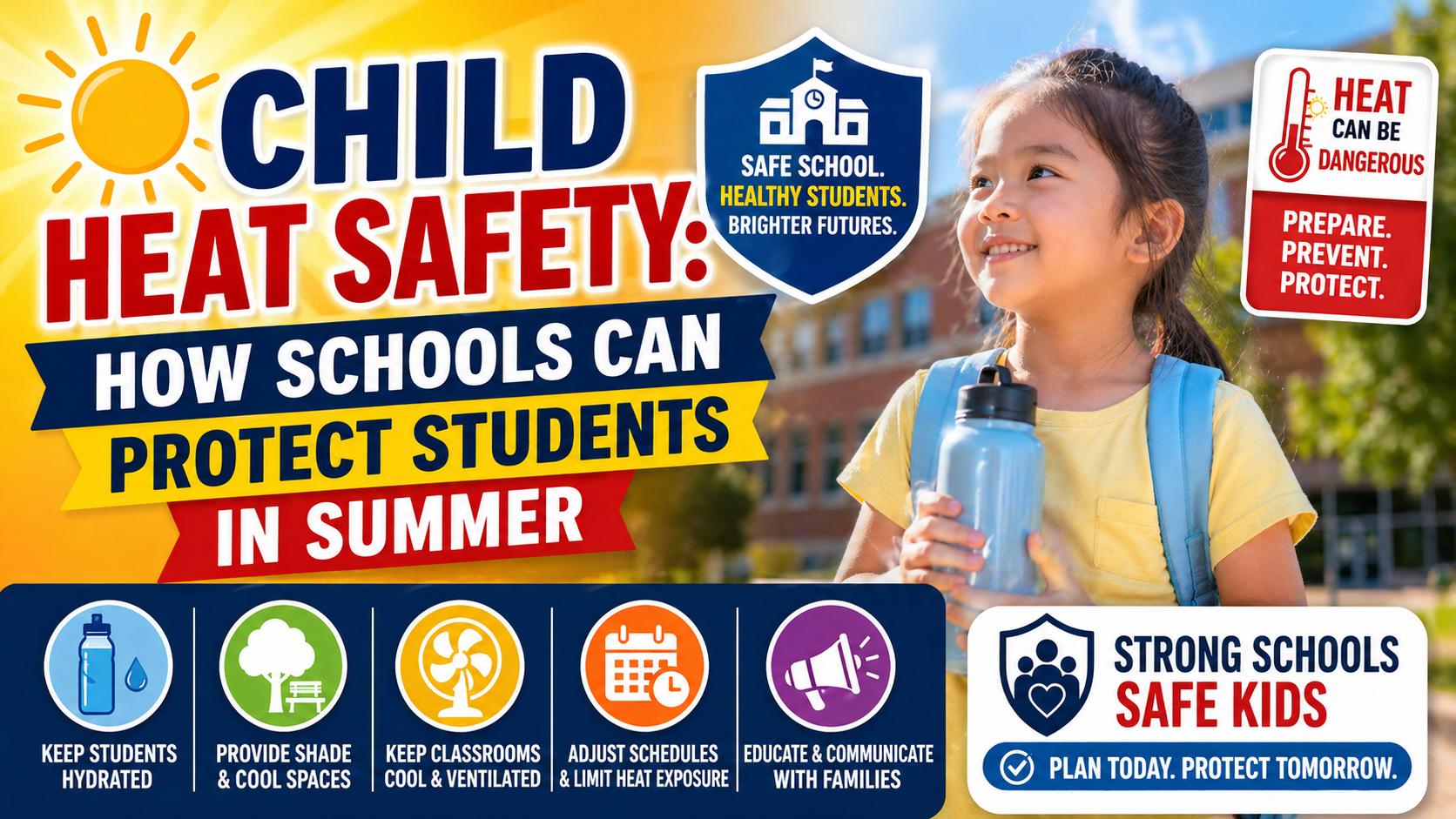
Rising temperatures are no longer a seasonal inconvenience—they are a serious health concern, especially for children.
Schools play a critical role in safeguarding students during extreme heat, where exposure can quickly lead to dehydration, fatigue, or even heat-related illnesses.
This makes Child Heat Safety not just a precaution but a responsibility embedded in school operations, infrastructure, and daily routines.
This guide explains how schools can build a practical, reliable system to protect students, while maintaining learning continuity during the summer months.
Why Heat Safety in Schools Needs Immediate Attention
Children are more vulnerable to heat than adults because their bodies regulate temperature less efficiently.
When schools overlook proper Child Heat Safety measures, even short outdoor exposure can escalate into health risks.
Factors like overcrowded classrooms, poor ventilation, and lack of hydration access worsen the situation.
Schools must treat heat safety as part of their core student welfare policies, similar to hygiene and emergency preparedness.
This includes structured planning, staff awareness, and consistent monitoring.
Understanding Heat Risks for Students
Before implementing solutions, schools like the Best Play School in Faridabad need clarity on the risks.
Heat exhaustion and heatstroke are the most common dangers. Early signs include dizziness, excessive sweating, headaches, and irritability.
Without timely intervention, these can escalate quickly.
A strong Child Heat Safety approach starts with awareness among teachers, staff, and even students. When everyone understands the risks, response becomes faster and more effective.
School Infrastructure and Heat Management
Infrastructure plays a major role in managing heat exposure. Classrooms that trap heat create an uncomfortable and unsafe learning environment.
Schools should focus on:
- Proper ventilation systems or fans
- Heat-reflective roofing or shaded structures
- Curtains or blinds to block direct sunlight
- Cooling zones or shaded rest areas
These upgrades directly support summer heat protection, ensuring that students are not constantly exposed to high temperatures during school hours.
Scheduling Changes for Safer School Days
One of the simplest yet most effective strategies is adjusting school schedules. Schools can start earlier in the morning and end before peak afternoon heat.
Outdoor summer activities like sports or assemblies should be limited or shifted to cooler hours.
This small operational change strengthens Child Heat Safety while maintaining academic flow. It also reduces reliance on reactive measures, focusing instead on prevention.
Encouraging Proper Summer Clothing in Schools
Uniform policies often overlook seasonal practicality. During summer, schools should allow breathable, light-colored fabrics that help regulate body temperature.
Loose-fitting summer clothing made from cotton or moisture-wicking materials can significantly reduce heat stress. Schools should communicate clear guidelines to parents, ensuring students are dressed appropriately.
When schools prioritize summer clothing, they directly contribute to better comfort, reduced sweating, and improved focus in classrooms.
Importance of Kids Sunscreen in Daily Routine
Many schools ignore sun exposure during short outdoor periods, assuming it is harmless. In reality, even brief exposure can affect children’s skin.
Encouraging the use of kids sunscreen before school hours or during outdoor breaks is a simple yet effective step. Schools can:
- Educate parents about sunscreen use
- Allow students to carry personal sunscreen
- Train staff to remind students during outdoor activities
Integrating kids sunscreen into daily school habits supports long-term skin health and overall summer safety.
Hydration Policies That Actually Work
Dehydration is one of the biggest risks during summer. Schools must go beyond just allowing water bottles.
Effective child hydration strategies include:
- Scheduled water breaks during classes
- Easy access to clean drinking water
- Encouraging students to drink even when not thirsty
- Monitoring younger children closely
Teachers should actively promote child hydration instead of assuming students will manage it themselves. This proactive approach strengthens Child Heat Safety and prevents avoidable health issues.
Limiting Outdoor Exposure Without Restricting Activity
Outdoor activities are important, but they need careful management. Instead of eliminating them, schools should modify them.
Shorter sessions, shaded play areas, and mandatory hydration breaks help balance activity with heat protection. Staff should monitor students closely for signs of fatigue or discomfort.
By managing outdoor exposure smartly, schools can maintain physical activity while ensuring summer heat protection.
Staff Training and Emergency Preparedness
Even the best policies fail without proper execution. Teachers and staff must be trained to identify early signs of heat-related illness and respond immediately.
Training should include:
- Recognizing symptoms of heat exhaustion
- First-aid response protocols
- When to escalate to medical help
Prepared staff form the backbone of effective Child Heat Safety, ensuring that risks are addressed before they become emergencies.
Creating Awareness Among Students
Students themselves should understand basic heat safety tips. Simple education sessions can make a big difference.
Teach them:
- The importance of drinking water regularly
- Wearing appropriate summer clothing
- Using kids sunscreen during outdoor time
- Recognizing when they feel unwell
When students are aware, they become active participants in maintaining summer safety rather than passive recipients of instructions.
Parent-School Collaboration
Heat safety doesn’t start or end at school—it’s a shared responsibility. Schools should actively communicate with parents about daily practices.
This includes:
- Ensuring children come prepared with water bottles
- Encouraging proper summer clothing
- Promoting regular use of kids sunscreen
- Reinforcing hydration habits at home
Strong collaboration ensures consistency, which is essential for effective Child Heat Safety.
Monitoring Weather Conditions Daily
Schools should not operate on fixed routines during unpredictable weather. Daily monitoring of temperature and heat index helps schools make informed decisions.
On extremely hot days, schools can:
- Cancel outdoor activities
- Shorten school hours
- Increase hydration breaks
This responsive approach strengthens summer heat protection and reduces unnecessary risk exposure.
Role of Technology in Heat Safety
Modern schools can use technology to improve heat safety measures. Temperature monitoring devices, hydration reminders, and digital alerts can enhance efficiency.
Schools can also use apps or communication platforms to inform parents about weather changes and safety measures, reinforcing summer safety across all levels.
Building a Long-Term Heat Safety Policy
Short-term fixes are not enough. Schools need a structured, long-term policy for Child Heat Safety.
This policy should cover:
- Infrastructure upgrades
- Seasonal schedule adjustments
- Staff training programs
- Emergency response plans
Consistency ensures that safety measures are not forgotten or ignored over time.
Quick Takeaways for Schools
Effective heat management is not complicated—it requires consistency and awareness. Schools should focus on:
- Regular child hydration practices
- Appropriate summer clothing policies
- Consistent use of kids sunscreen
- Controlled outdoor exposure for better heat protection
These simple actions collectively create a strong system of summer heat protection.
Final Thoughts
Ignoring heat risks in schools is not just careless—it’s preventable. With structured planning, informed staff, and active student participation, schools can create a safe environment even during peak summer.
Prioritizing Child Heat Safety ensures that students stay healthy, focused, and ready to learn.
Schools that take this seriously not only protect their students but also build trust with parents and the community.
A well-prepared school doesn’t react to heat—it stays ahead of it.