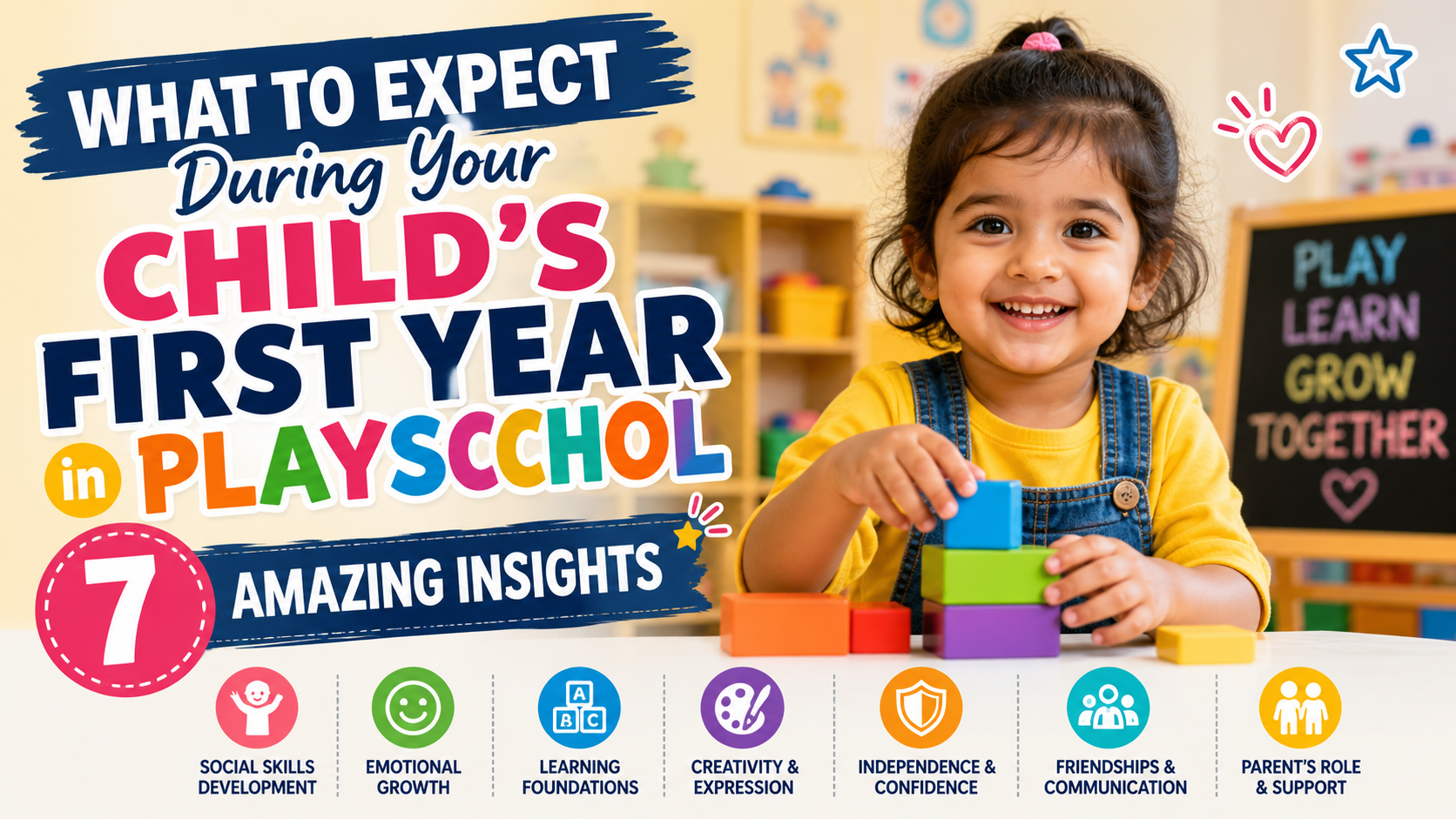
Starting your child’s journey in Playschool? is a big emotional and developmental milestone—for both of you.
It’s the first time your child steps into a structured environment outside home, and naturally, questions, doubts, and even anxiety follow.
The good news is that the first year is less about academics and more about building comfort, confidence, and curiosity.
This guide breaks down exactly what happens during that first year in Playschool?, especially if you’re choosing the Best Play School in Faridabad, what changes you’ll notice, and how you can support your child through it without overthinking every step.
Why the First Year in Playschool Matters More Than You Think
The first year in Playschool? lays the foundation for early childhood education. It’s not about memorizing alphabets or numbers. It’s about helping children adapt to a preschool routine, interact with others, and develop independence.
Children who adjust well during this phase often show stronger child social development and better learning habits later. The focus is on learning through play, not pressure.
If you’re expecting rapid academic progress, you’re looking at it the wrong way. The real growth is emotional, behavioral, and social.
Insight 1: Separation Anxiety Is Normal (And Temporary)
One of the first things you’ll experience in Playschool? is your child resisting drop-offs. Crying, clinging, or refusing to enter the classroom is common in the beginning.
This is not a sign that something is wrong. It simply means your child is adjusting to a new environment and unfamiliar faces.
Over time, as the preschool routine becomes predictable, your child will start feeling safe. Consistency is key here. Avoid long goodbyes or dramatic exits. Keep it simple and confident.
From an early childhood education perspective, this phase helps build emotional resilience. Children learn that parents return, and new environments can be safe too.
Insight 2: Learning Happens Through Play, Not Pressure
If you think about Playschool? means structured teaching sessions, worksheets, and strict learning schedules, you need to reset expectations.
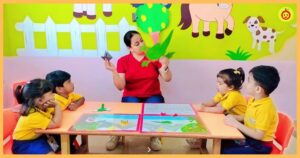
Most of the learning happens through play-based activities—blocks, storytelling, music, and group games. This approach of learning through play enhances creativity, problem-solving, and communication skills.
Your child may come home talking about games rather than lessons. That’s exactly how it should be.
In early childhood education, play is not a break from learning—it is the learning. Activities are designed to improve focus, coordination, and social interaction without making it feel like work.
Insight 3: Social Skills Start Developing Rapidly
Before Playschool?, your child’s interaction circle is limited—mostly family members. Once they start attending regularly, child social development accelerates quickly.
They begin sharing toys, taking turns, observing others, and even resolving small conflicts. You might notice new behaviors—some good, some challenging.
For example, your child might pick up habits from peers. Don’t panic. This is part of social exposure.
The structured preschool routine teaches boundaries, cooperation, and empathy. These are critical life skills that cannot be taught effectively at home alone.
Insight 4: Routine Brings Stability and Confidence
Children thrive on consistency. A fixed preschool routine—arrival time, snack time, playtime, and departure—helps them feel secure.
During the first few months in Playschool?, your child may struggle to follow routines. But gradually, they start anticipating what comes next.
This predictability builds confidence. When children know what to expect, they feel in control of their environment.
From an early childhood education standpoint, routine is not just about discipline—it’s about reducing anxiety and improving adaptability.
At home, you can support this by aligning sleep schedules and meal timings with the school routine.
Insight 5: Language and Communication Improve Noticeably
One of the most visible changes during the first year in Playschool? is language development.
Children start picking up new words, forming simple sentences, and expressing their needs more clearly. This happens through interaction, storytelling, and learning through play activities.
Don’t expect perfect grammar or structured speech. The goal is communication, not perfection.
Group settings also encourage children to listen and respond, which strengthens both verbal and non-verbal communication.
Child social development plays a big role here. The more children interact, the more confident they become in expressing themselves.
Insight 6: Emotional Ups and Downs Are Part of the Process
Your child may come home happy one day and cranky the next. Is this emotional fluctuation normal during the first year in Playschool?.
They are processing new experiences, environments, and relationships. Fatigue, overstimulation, or minor conflicts can affect mood.
Instead of reacting immediately, observe patterns. Talk to teachers if needed, but avoid jumping to conclusions.
A structured preschool routine helps stabilize emotions over time. Children learn how to manage feelings, express frustration, and adapt to situations.
This emotional growth is a core part of early Play School Education and often goes unnoticed compared to academic milestones.
Insight 7: Independence Begins to Take Shape
One of the biggest transformations you’ll see during the first year in Playschool? is independence.
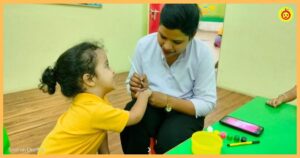
Your child will start doing small tasks on their own—packing bags, eating without assistance, following instructions, and even making simple choices.
This shift is intentional. Schools encourage independence as part of learning through play and daily activities.
While it may feel like your child is “growing up too fast,” this independence builds confidence and self-reliance.
Child social development also benefits here, as children learn to function in a group without constant parental support.
How You Can Support Your Child During This Phase
Your role during this transition matters more than you think. What you do at home directly impacts how your child experiences Playschool?.
Keep your approach practical and grounded.
Stick to a consistent routine at home that matches the preschool routine. This reduces confusion and builds familiarity.
Avoid over-questioning. Instead of asking “What did you learn today?” try “What did you enjoy today?” This aligns better with the concept of learning through play.
Stay calm during emotional phases. Your reaction influences how your child processes their own feelings.
Build trust with teachers. They observe your child in a different environment and can offer valuable insights.
Most importantly, don’t compare your child with others. Every child adapts differently in early childhood education settings.
Common Mistakes Parents Make (And How to Avoid Them)
Many parents unintentionally make the first year harder by setting unrealistic expectations.
Expecting immediate academic results is one of the biggest mistakes. Playschool? is not about performance—it’s about preparation.
Another common issue is inconsistency. Irregular attendance disrupts the preschool routine and delays adjustment.
Overprotecting your child can also slow down independence. Let them experience small challenges instead of stepping in immediately.
Lastly, avoid labeling behaviors too quickly. Temporary changes are part of child social development and usually settle with time.
Signs Your Child Is Adjusting Well
By the middle of the year, you’ll start noticing positive changes if things are going right.
Your child enters the school without resistance or recovers quickly after drop-off.
They talk about friends or activities at school.
They follow basic instructions and show interest in group activities.
These are strong indicators that your child is adapting well to Playschool? and benefiting from early childhood education.
Quick Takeaways for Parents
The first year in Playschool? is less about teaching and more about transition. Focus on emotional comfort, not academic outcomes.
Consistency beats intensity. A stable preschool routine matters more than advanced learning.
Social exposure is essential. Child social development cannot happen in isolation.
Play is powerful. Learning through play builds skills that structured teaching cannot.
Patience is non-negotiable. Every child takes their own time to adjust.
Final Thoughts
If you’re still wondering what to expect from Playschool?, the simplest answer is this: expect growth, not perfection.
Your child will not come back as a genius in a year, but they will come back more confident, expressive, and independent.
That’s the real goal of early childhood education.
The journey may feel uncertain in the beginning, but once your child settles into the preschool routine, you’ll start seeing meaningful changes that go far beyond academics.
Stay involved, stay patient, and most importantly—trust the process.