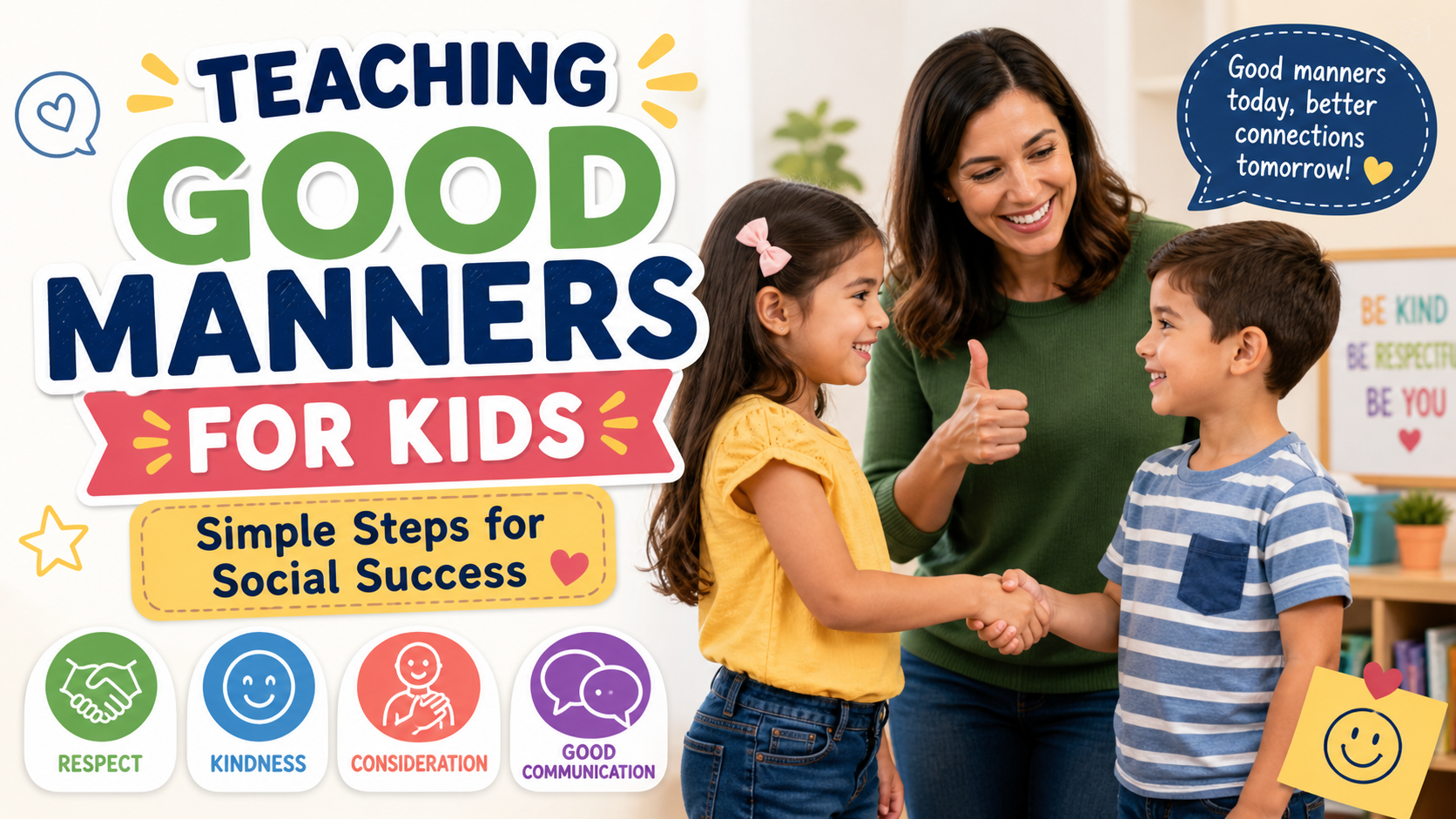
Teaching Good Manners for Kids is not about forcing rules or creating rigid behavior. It’s about helping children understand how their actions affect others and guiding them to interact with confidence, respect, and empathy. In a world where social skills matter as much as academic success, manners become a lifelong advantage.
This guide breaks down practical, realistic ways to build strong etiquette habits in children without turning it into a constant lecture.
Why Good Manners Matter More Than You Think
Good behavior isn’t just about being “polite.” It directly impacts how children are perceived, how they build relationships, and how they handle real-life situations. When you consistently teach Good Manners for Kids, you’re shaping how they communicate, resolve conflicts, and show respect.
Children with strong manners tend to perform better socially and emotionally. They are more likely to be accepted in peer groups, respected by teachers, and trusted by adults. This is why child behavior development and etiquette go hand in hand.
More importantly, manners create self-awareness. Kids begin to understand tone, boundaries, and empathy, which are essential life skills.
Start Early: The Foundation of Respect
The earlier you begin, the easier it becomes. Young children absorb behavior through observation, not lectures. If you’re serious about teaching Good Manners for Kids, your own behavior matters more than anything you say.
Say “please,” “thank you,” and “sorry” consistently in front of them. Demonstrate patience in conversations. Kids mirror adults faster than they follow instructions.
This early stage is crucial for teaching kids respect. Respect isn’t a rule; it’s a habit formed through daily interaction. When a child sees respectful communication at home, they replicate it naturally outside.
Everyday Situations That Shape Manners
You don’t need special sessions to teach manners. Real learning happens in daily life. Mealtime, greetings, sharing toys, and even screen time become opportunities.
For example, dinner is the best place to reinforce table manners for kids. Instead of correcting harshly, guide gently. Show them how to wait, how to ask politely, and how to listen when others speak.
Similarly, when guests arrive, teach children how to greet properly. When they play with others, encourage sharing and taking turns. These small interactions shape long-term behavior.
Consistent exposure to such situations strengthens social skills for children without making it feel like a lesson.
Teach, Don’t Command
There’s a difference between instructing and explaining. If you constantly say “Do this” or “Don’t do that,” kids follow temporarily but don’t understand why.
When teaching Good Manners for Kids, explain the reason behind the behavior. Instead of saying “Don’t interrupt,” say, “When you interrupt, the other person feels unheard.”
This approach builds emotional intelligence. Children start connecting actions with consequences, which improves child behavior development in a deeper way.
Make It Practical and Relatable
Kids learn better when they see relevance. Abstract rules don’t stick. Real-life examples do.
If a child refuses to say thank you, don’t just insist. Ask them how they feel when someone appreciates them. Help them connect the emotion with the action.
This method strengthens teaching kids respect because it’s based on understanding, not fear.
You can also use stories, role-play, or simple scenarios. Pretending situations like meeting a new friend or visiting someone’s home can make learning skills memorable.
Consistency Beats Perfection
One of the biggest mistakes parents make is being inconsistent. Manners cannot be taught one day and ignored the next.
If you’re serious about building Good Manners for Kids, consistency is non-negotiable. Set clear expectations and stick to them. Whether at home or outside, the rules should remain the same.
This consistency plays a key role in reinforcing social skills for children, especially in different environments like school, family gatherings, or public places.
Positive Reinforcement Works Better Than Punishment
Punishment may stop behavior temporarily, but it doesn’t teach anything long-term. Recognition, on the other hand, encourages repetition.
When your child shows good behavior, acknowledge it. A simple “I liked how you waited your turn” goes a long way.
This boosts confidence and motivates children to repeat good actions. It also supports child behavior development by creating positive associations with manners.
However, don’t overdo praise. Keep it genuine and specific.
Teach Digital Manners Too
Modern etiquette isn’t limited to face-to-face interaction. Kids today spend significant time online, which means digital behavior matters just as much.
Teach them not to interrupt when someone is speaking, even on video calls. Show them how to communicate respectfully in messages. Explain the importance of privacy and kindness online.
Digital etiquette is now a critical part of social skills for children, and ignoring it creates gaps in their overall behavior.
Be Patient: Manners Take Time
Children won’t get everything right immediately. They will forget, make mistakes, and test boundaries.
That’s normal.
Teaching Good Manners for Kids is a gradual process, not a one-time lesson. What matters is how you respond. Stay calm, correct gently, and repeat when needed.
Frustration or harsh reactions often backfire and make children resistant.
Patience ensures that teaching kids respect becomes a positive experience rather than a stressful one.
Common Mistakes Parents Should Avoid
Many parents unintentionally slow down their child’s progress by expecting perfection too soon or by comparing them with others.
Another mistake is teaching manners only in public. Kids quickly understand when behavior is enforced only for appearances.
Avoid over-correcting small mistakes. Focus on patterns instead of every minor slip. This helps maintain a healthy learning environment and supports steady child behavior development.
How Schools and Environment Influence Manners
While parents play the primary role, external environments also shape behavior. Schools, friends, and social settings reinforce or challenge what children learn at home.
If you want to strengthen Good Manners for Kids, collaborate with teachers and ensure consistency between home and school expectations, especially when choosing the best play school in Faridabad.
A supportive environment accelerates learning and enhances social skills for children, especially in group interactions.
Practical Daily Habits That Build Strong Manners
Start with simple routines. Greeting people, asking politely, waiting for turns, and expressing gratitude should become part of daily life.
Make manners visible. Talk about them openly, not as rules but as values. When kids understand why something matters, they are more likely to follow it.
Regular practice of these habits strengthens table manners for kids as well as overall behavior in social settings.
Building Confidence Through Manners
Manners are not about restricting personality. They actually enhance confidence.
Children who know how to behave in different situations feel more comfortable and less anxious. They know what to say, how to respond, and how to interact.
This confidence is a direct result of consistent training in Good Manners for Kids, combined with strong social skills for children.
It prepares them not just for school but for life.
Quick Takeaways for Parents
Focus on modeling behavior rather than lecturing. Be consistent with expectations. Use real-life situations as teaching moments. Encourage, don’t punish. Stay patient and realistic.
Most importantly, remember that manners are built over time, not overnight.
Final Thoughts
Teaching Good Manners for Kids is one of the most valuable investments you can make in your child’s future. It goes beyond politeness and shapes personality, relationships, and confidence.
If you approach it with consistency, patience, and understanding, the results are long-lasting. Strong manners create socially aware, respectful, and confident individuals who can navigate any environment with ease.
Start small, stay consistent, and focus on real-life application. That’s what truly builds lasting social success and supports long-term career success.