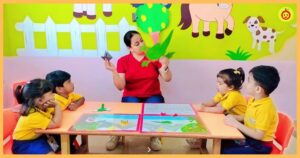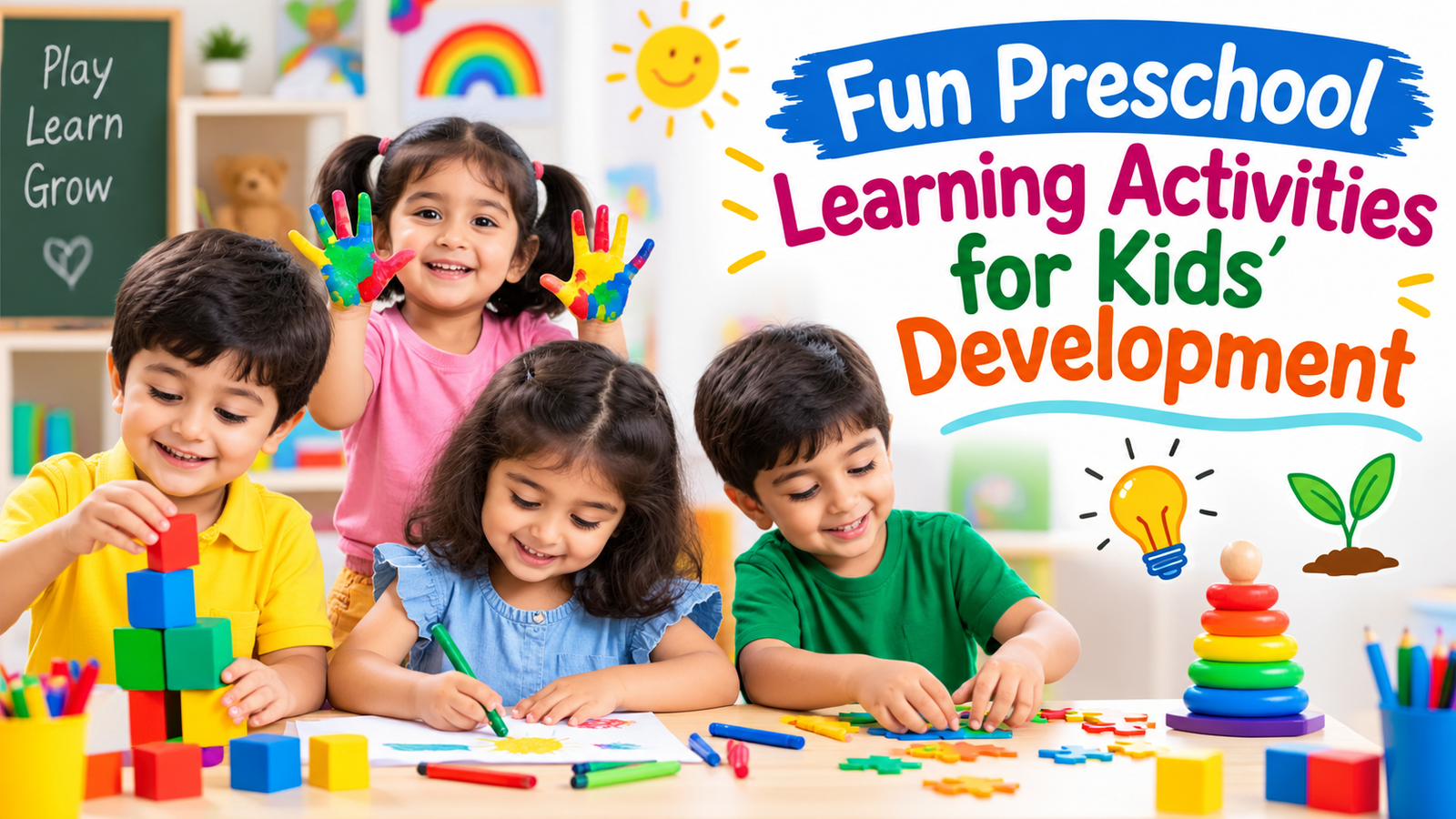
Choosing the right activities during the preschool years can make learning more enjoyable and meaningful for young children. At Appleseeds, children can explore age-appropriate experiences that encourage curiosity, creativity, communication, and confidence. Preschool learning activities help children understand new concepts through play, movement, stories, art, and simple hands-on tasks. These experiences allow children to learn at their own pace while developing important skills for everyday life. Instead of focusing only on books and worksheets, preschool learning should give children opportunities to discover, ask questions, interact with others, and express their ideas. A balanced learning environment can help children feel comfortable while participating in new activities and building positive habits from an early age. Parents looking for the best play school in Faridabad can consider an environment that combines structured learning with fun, creative, and age-appropriate experiences.
Well-planned preschool learning activities can also support physical, social, emotional, and cognitive growth. Simple classroom games, creative projects, group tasks, and outdoor activities can encourage children to cooperate, communicate, solve problems, and become more independent. These experiences contribute to early childhood development by creating opportunities for children to practice skills naturally through enjoyable experiences. When learning feels like play, children are often more willing to participate and explore.
Read More:Preschool Education: Building A Strong Foundation For Kids
Creative Art and Craft Activities
Art is an excellent way for young children to express themselves. Drawing, colouring, painting, paper cutting, clay modelling, and simple craft projects can improve creativity while helping children strengthen their hand and finger muscles.
Teachers can provide safe materials and allow children to experiment with different colours, shapes, and textures. Children can create pictures based on stories, seasons, animals, or their imagination. Such preschool learning activities encourage self-expression and help children develop concentration and patience.
Craft activities can also introduce basic concepts such as patterns, sizes, shapes, and colours. Rather than expecting every child to produce the same result, teachers can encourage individual creativity and appreciate each child’s effort.
Storytelling and Role Play
Storytelling is another valuable way to make learning interesting. Teachers can use picture books, puppets, simple characters, and interactive storytelling to introduce new words and ideas.
After listening to a story, children can act out different characters or create their own endings. Role play allows children to practise communication and understand emotions from different perspectives. These preschool activities for kids can also encourage children to speak confidently in front of their classmates.
Story-based activities can support listening skills, vocabulary, imagination, and memory. They can also introduce important values such as kindness, sharing, helping others, and respecting different opinions.
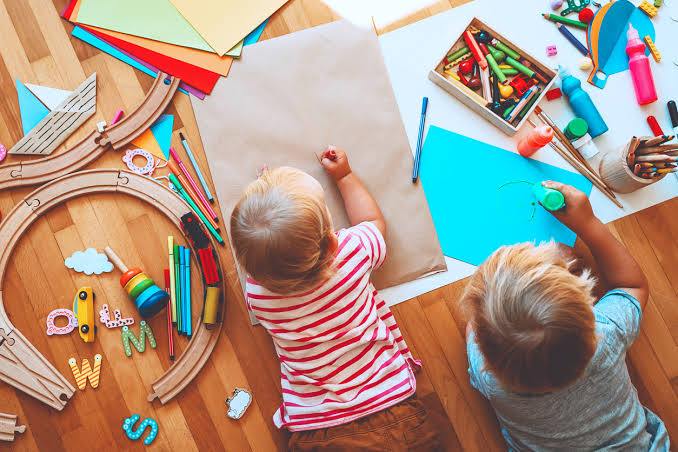
Building and Sorting Games
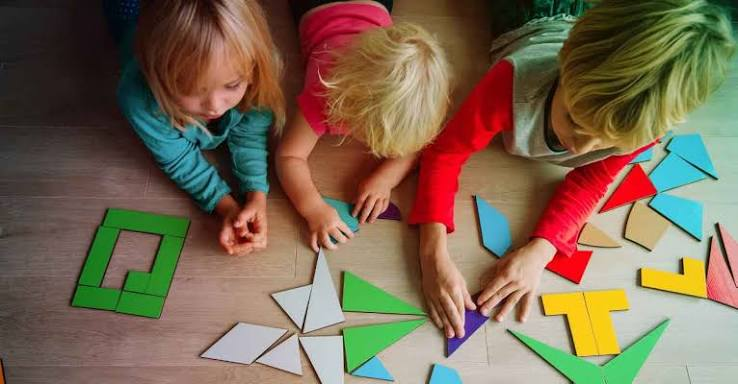
Building blocks, puzzles, matching cards, and sorting games are useful for developing thinking skills. Children can arrange blocks according to colour, size, or shape, while puzzles can encourage them to observe details and find solutions.
These activities introduce early problem-solving concepts without making learning feel difficult. Children learn through trial and error and gradually understand how different pieces or objects relate to one another.
Teachers can make these preschool learning activities more engaging by giving children small challenges. For example, they can ask children to build a tower using a specific number of blocks or arrange objects from smallest to largest.
Music, Dance, and Movement
Young children naturally enjoy music and movement. Singing simple songs, clapping rhythms, dancing, and playing musical games can help children improve coordination and body awareness.
Movement-based activities can also provide opportunities for children to follow instructions and participate in groups. Teachers can introduce songs involving actions such as jumping, clapping, turning, or moving slowly and quickly.
These experiences make preschool learning activities energetic and enjoyable while supporting physical development. They can also help children release energy in a positive and structured environment.
Outdoor Learning Activities
Outdoor play gives children an opportunity to explore their surroundings and develop physical skills. Running, jumping, balancing, throwing, catching, and simple obstacle courses can improve coordination and strength.
Teachers can also turn outdoor time into a learning experience. Children may observe plants, identify different colours, count objects, look for shapes, or learn about weather. Nature-based exploration can encourage curiosity and observation.
Outdoor preschool learning activities can also support social interaction because children often learn to take turns, follow simple rules, and cooperate during group games.
Simple Science Experiments
Preschool children are naturally curious about how things work. Simple and safe science activities can help them explore basic concepts through observation.
For example, teachers can demonstrate which objects float or sink, how colours mix, how plants grow, or how shadows change. Children can make predictions and then observe what happens.
These experiments encourage questioning and help children understand that learning can involve exploring, testing, and discovering. Such preschool learning activities can create a strong foundation for scientific thinking.
Group Games for Teamwork
Group games can help children learn how to interact with others. Activities such as passing a ball, completing a group puzzle, building something together, or participating in a simple treasure hunt encourage cooperation.
Children learn to listen to others, wait for their turn, share materials, and work toward a common goal. These preschool activities for kids can also help children develop patience and understand the importance of teamwork.
Teachers should make sure that group activities are inclusive so that every child gets an opportunity to participate. The focus should be on cooperation and enjoyment rather than competition.
Number and Letter Games
Early mathematics and language concepts can be introduced through games. Children can count toys, match numbers with objects, identify letters, recognise sounds, and arrange objects in simple sequences.
Teachers can use flashcards, blocks, songs, puzzles, and everyday classroom objects to make these concepts easier to understand. For example, children can count crayons while drawing or identify the first letter of familiar objects.
These activities make learning practical and help children connect classroom concepts with their surroundings.
Why Play-Based Learning Matters
Play is an important part of preschool education because it allows children to learn through direct experience. When children build, draw, sing, move, explore, and interact with others, they practise different skills at the same time.
Play-based experiences can support early childhood development by encouraging communication, creativity, problem-solving, emotional awareness, and independence. Children also learn to make choices, handle small challenges, and understand the consequences of their actions.
Teachers can observe children during play to understand their interests and learning needs. Activities can then be adjusted according to age, ability, and individual development.
Tips for Choosing Suitable Activities
Parents and teachers should choose activities according to children’s age and abilities. Activities should be simple enough for children to understand but challenging enough to keep them interested.
Safety should always be considered, especially when using small objects, art materials, or outdoor equipment. Children should also be given enough time to explore rather than being rushed from one activity to another.
A good preschool environment should include a variety of experiences. Combining creative, physical, social, language, mathematical, and nature-based activities can create a balanced learning routine.
Most importantly, children should enjoy the learning process. Positive encouragement can help them become more confident and willing to try new things.
Conclusion
Fun and meaningful activities can make preschool education an enjoyable experience while supporting children’s overall growth. From art and storytelling to outdoor exploration, music, puzzles, science experiments, and group games, children can develop important skills through everyday experiences. Well-planned activities encourage curiosity, creativity, communication, independence, and cooperation while creating a positive attitude toward learning.
For parents looking for a supportive environment where children can learn through engaging experiences, Appleseeds can provide opportunities that combine learning, play, creativity, and social interaction. With age-appropriate activities and a child-friendly approach, preschool can become an important foundation for confident and enthusiastic learners.