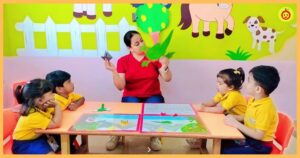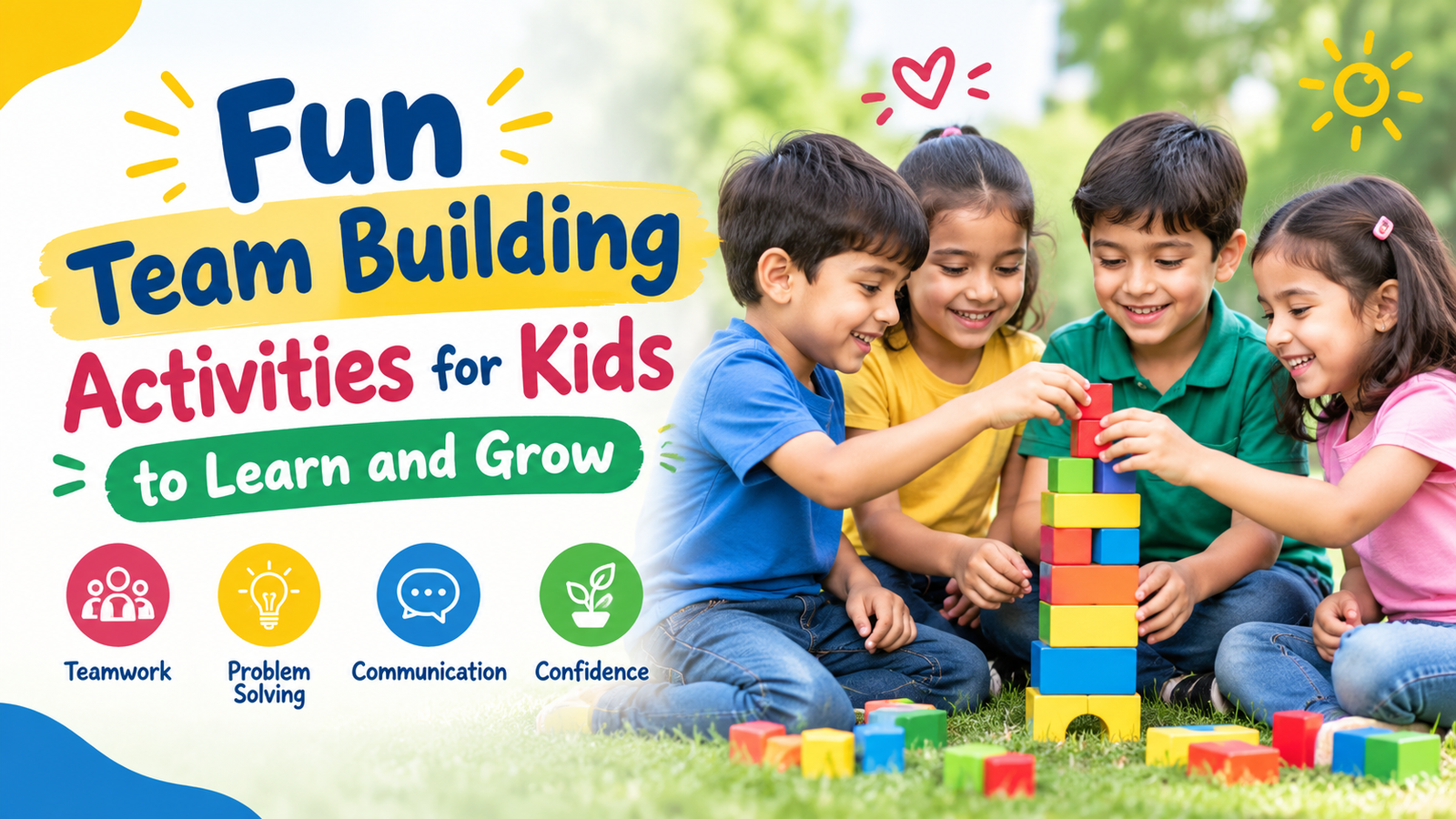
Learning becomes more meaningful when children can interact, cooperate, and enjoy activities together. Team building activities for kids provide opportunities to develop communication, confidence, creativity, and problem-solving abilities in a fun environment. Instead of learning only through books, children can discover important social skills by participating in group games and shared tasks. At Appleseeds, such interactive experiences can encourage children to communicate with their classmates, listen to different ideas, and understand the value of cooperation. For parents looking for child day care near me Faridabad, a learning environment that combines care with engaging group activities can provide children with valuable opportunities to learn and socialize. These activities can be adapted according to children’s age and abilities, making them suitable for classrooms, playgroups, and early learning settings.
Young children naturally enjoy playing with others, but they may need guidance to understand sharing, taking turns, following rules, and working toward a common goal. Well-planned group activities can make these lessons enjoyable while supporting emotional and social growth. When children participate regularly, they can become more comfortable expressing themselves, helping others, and handling small challenges together. This approach can also make the learning environment more engaging and encourage children to build positive relationships with their peers.
Read More:Fun Preschool Learning Activities For Kids’ Development
Why Team Building Activities for Kids Are Important
Team building activities for kids can support several areas of early childhood learning. When children work together, they learn that completing a task does not always depend on individual performance. They may need to listen, communicate, share materials, and coordinate their actions with others.
These experiences can help children develop:
- Communication skills
- Listening abilities
- Confidence
- Cooperation
- Leadership qualities
- Problem-solving skills
- Patience and self-control
- Respect for others
Group play can also help children understand that everyone has different strengths. One child may be good at explaining instructions, while another may be creative with ideas or quick at solving a puzzle. Recognizing these differences can encourage children to appreciate and support one another.
Simple Activities for Classroom Learning
Teachers can introduce simple group games that require minimal preparation. The activities should be enjoyable, age-appropriate, and focused on participation rather than competition.
Build a Tower Together
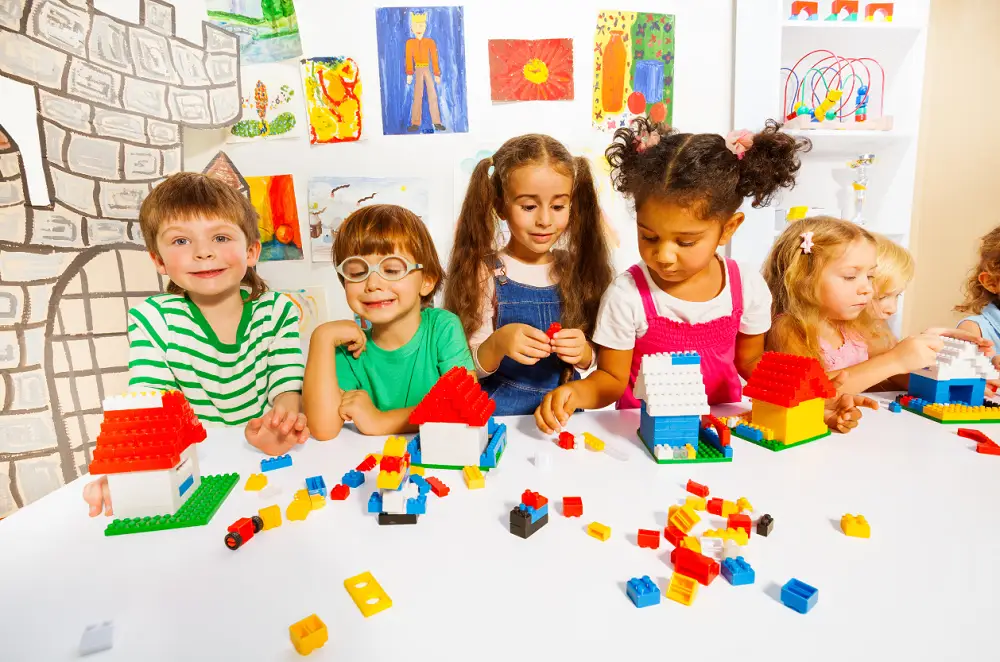
Give small groups building blocks, paper cups, or other safe materials. Ask children to create the tallest or strongest structure they can make together. They need to discuss ideas, divide responsibilities, and decide how to solve problems when the structure falls.
This activity encourages children to experiment and communicate while learning that mistakes are part of the learning process.
Group Drawing
Provide a large sheet of paper and crayons or washable markers. Each child can contribute to one shared drawing. Teachers can give a simple theme, such as a park, garden, classroom, or imaginary city.
This encourages children to exchange ideas and respect the contributions of their classmates. It also gives quieter children an opportunity to participate without having to speak continuously.
Pass the Ball
Children can stand or sit in a circle and pass a soft ball while music plays. When the music stops, the child holding the ball can answer a simple question, perform an action, or say something they enjoy.
The game can help children become comfortable speaking in front of others while practicing patience and turn-taking.
Teamwork Activities That Encourage Cooperation
Well-designed teamwork activities should encourage children to work toward a shared objective instead of focusing entirely on winning. Teachers can create activities where every participant has an important role.
Treasure Hunt
A classroom treasure hunt can involve simple clues placed around a safe learning area. Children can work in small groups to find each clue and reach the final destination.
Teachers can give different responsibilities to children, such as reading clues, searching for objects, or keeping track of the group. This makes the activity interactive while encouraging communication.
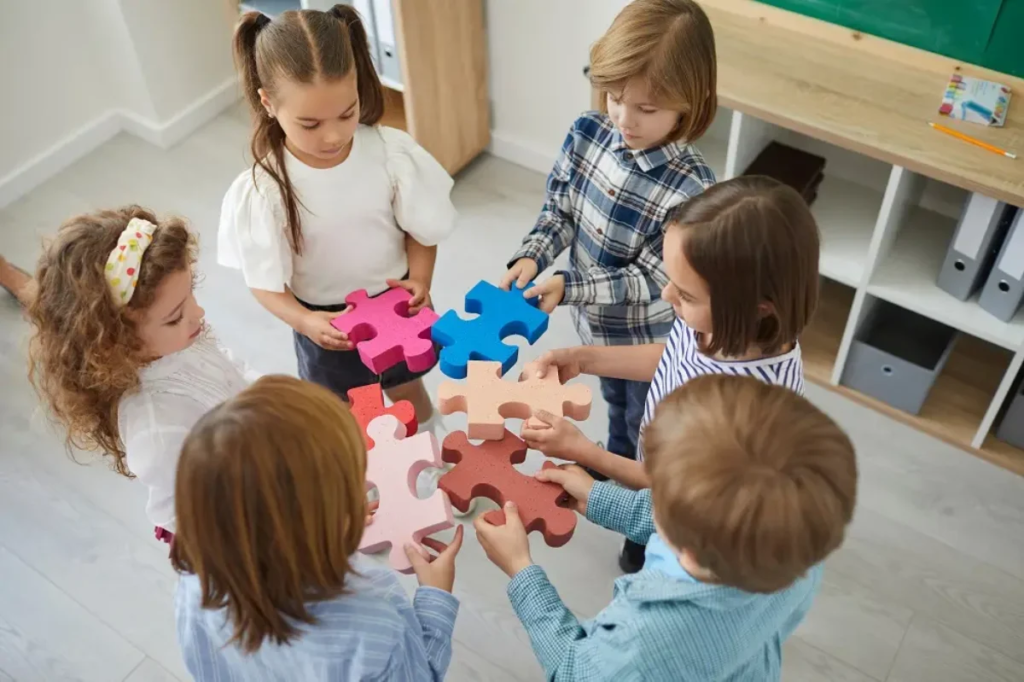
Puzzle Challenge
Give each group a simple age-appropriate puzzle. Instead of allowing one child to complete it alone, encourage everyone to contribute. Children can discuss where different pieces belong and help classmates who need assistance.
The activity can strengthen patience and encourage children to listen to alternative ideas.
Balloon Balance
Children can work together to keep one or more balloons from touching the floor. They can gently tap the balloons while communicating about where they should move next.
This simple game can encourage coordination, attention, and cooperation while creating an enjoyable classroom atmosphere.
Outdoor Activities for Young Children
Outdoor play provides more space for active group experiences. Teachers can organize relay races, obstacle courses, group ball games, and nature-based challenges.
A simple obstacle course can involve crawling under a safe tunnel, walking around cones, jumping over low markers, and carrying a lightweight object to a designated point. Children can encourage each other while completing the course.
Nature activities can also be turned into collaborative learning experiences. Children can work in groups to collect fallen leaves, identify different textures, or find objects according to a teacher’s instructions. Such activities combine physical movement with observation and discussion.
Creative Games That Build Confidence
Creative games can help children express their ideas without feeling pressured to produce a perfect result. Teachers can organize group storytelling, role-playing, puppet shows, or simple drama activities.
For example, children can create a short story together. One child can introduce the setting, another can create a character, and others can decide what happens next. Teachers can guide the story while allowing children to contribute their own ideas.
Music-based group games can also be useful. Children can form a circle and follow simple rhythms by clapping, tapping, or moving to music. Such activities can improve coordination and encourage children to participate collectively.
Supporting Kids Development Through Group Play
Regular participation in group play can contribute to kids development by giving children practical opportunities to practice skills they may not learn through individual activities alone. They can learn how to respond when a friend disagrees, how to ask for help, and how to support someone who is struggling.
Teachers and parents should focus on effort and cooperation rather than simply announcing winners. Praising children for listening, helping others, sharing, and trying again after a mistake can create a positive learning environment.
Children also need opportunities to experience small challenges independently. Adults can provide guidance without immediately solving every problem. This allows children to think, discuss possible solutions, and make decisions with their peers.
How Teachers Can Make Activities More Effective
The success of a group activity depends on how it is planned and introduced. Teachers should consider children’s ages, abilities, interests, and comfort levels before selecting an activity.
A few useful approaches include:
- Keep instructions simple and clear.
- Demonstrate the activity before starting.
- Create small groups when appropriate.
- Give every child a meaningful role.
- Encourage children to listen to one another.
- Avoid excessive competition.
- Praise cooperation and effort.
- Make activities flexible when children need support.
It is also important to observe how children interact during activities. A child who prefers to stay quiet may need gentle encouragement, while a highly energetic child may need guidance about taking turns.
Benefits Beyond the Classroom
The skills children practice through group activities can be useful in everyday situations. Sharing toys, helping siblings, communicating with parents, and making friends all require some level of cooperation.
Team building activities for kids can therefore become more than simple games. They can provide practical situations in which children learn to communicate, solve problems, respect differences, and work toward common goals.
Parents can continue these experiences at home by organizing simple family games, cooking tasks, building projects, or collaborative art activities. The goal is not to create complicated lessons but to provide children with regular opportunities to interact and cooperate.
Building Positive Social Experiences
Children learn best when they feel safe, included, and encouraged. Team building activities for kids should therefore be designed to make every child feel valued. Activities should allow different types of participation so that children with different personalities and abilities can contribute.
Teachers can rotate roles so that the same child does not always become the leader. One day, a child might organize materials, while another day they might explain an idea or help a classmate. This allows children to experience different responsibilities and understand the importance of every role.
Group activities can also teach children that disagreements do not always have to become conflicts. With appropriate guidance, children can learn to listen, explain their feelings, consider another person’s viewpoint, and find a solution that works for everyone.
Conclusion
Team building activities for kids can turn everyday learning into enjoyable experiences that encourage communication, cooperation, creativity, and confidence. From building towers and solving puzzles to treasure hunts, group drawing, outdoor challenges, and storytelling, children can learn valuable skills while having fun with their peers. Consistent participation can strengthen social interaction and encourage children to become more patient, helpful, and confident. Parents looking for the best play school in Faridabad can consider learning environments that provide children with age-appropriate group activities and opportunities to interact with their peers. Parents and teachers can choose simple activities according to children’s age and interests while focusing on participation rather than competition. Creating opportunities for children to work together can support their overall learning and social growth. At Appleseeds, engaging group experiences can help create a positive environment where children learn, play, cooperate, and grow together.