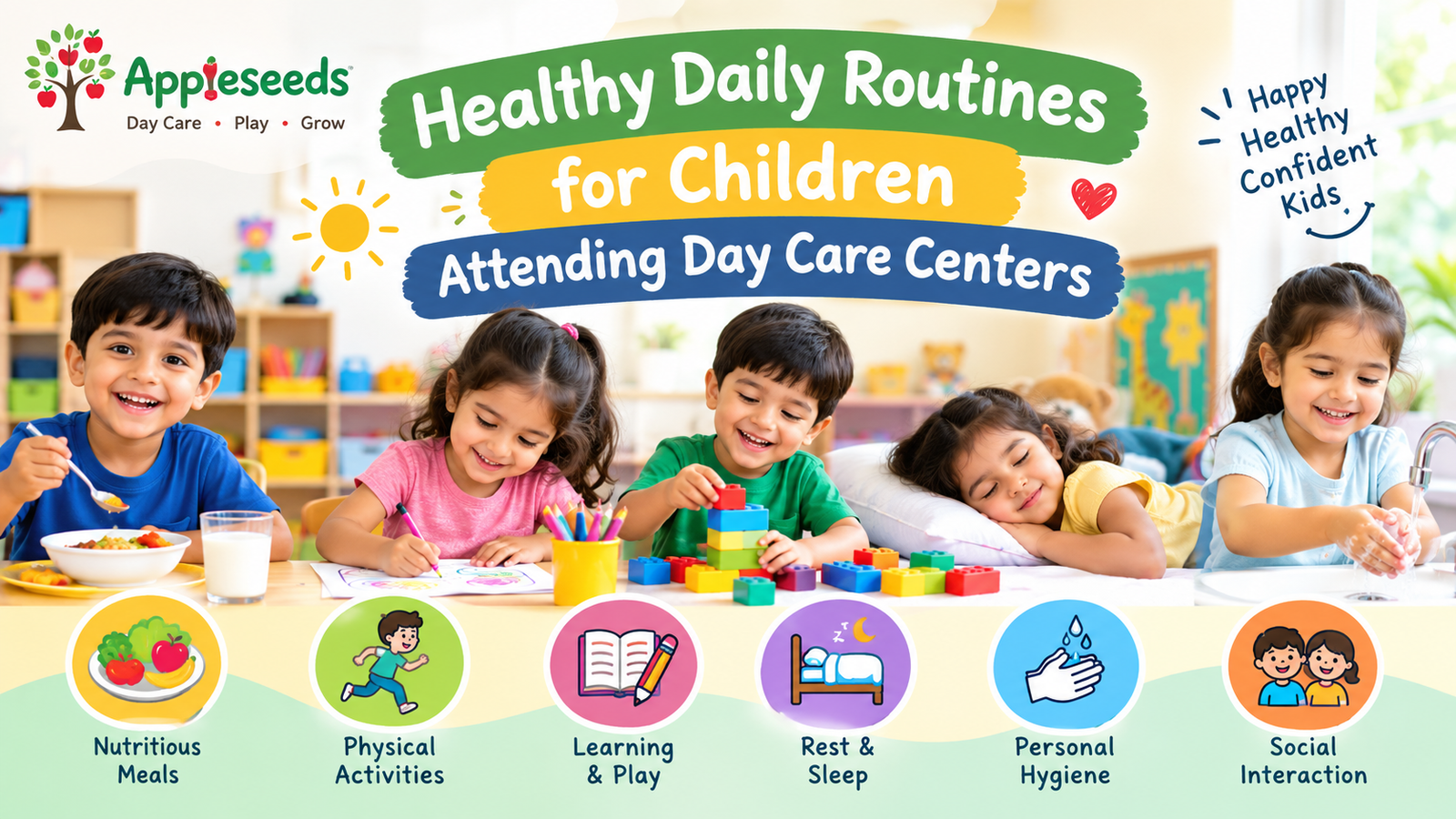
Creating a structured daily routine is essential for a child’s physical, emotional, and mental development. Children attending day care centers benefit from a balanced schedule that includes nutritious meals, physical activities, learning sessions, rest, and social interaction. Establishing healthy daily routines for children helps them develop independence, confidence, and positive habits from an early age. At Appleseeds, a trusted choice for child day care in Faridabad, children can explore, learn, and grow through age-appropriate activities in a nurturing environment. A consistent routine also helps young learners feel comfortable and secure throughout their day.
Parents and caregivers play an important role in maintaining consistency between home and day care environments. Simple activities such as waking up at a regular time, eating balanced meals, participating in creative play, and following a proper sleep schedule contribute to overall well-being. When children understand what to expect during the day, they experience fewer difficulties adjusting to different activities. A thoughtfully planned routine supports their development while making everyday experiences more enjoyable and meaningful.
Read More: How Day Care For Children Supports Early Growth And Learning
Why Are Healthy Daily Routines for Children Important?
Young children feel more secure when their daily activities follow a predictable pattern. A structured schedule helps them understand when it is time to eat, play, learn, and rest.
Following healthy daily routines for children offers several developmental benefits:
- Encourages independence and responsibility.
- Supports emotional stability and confidence.
- Improves concentration during learning activities.
- Promotes healthy eating and sleeping patterns.
- Develops communication and social interaction skills.
- Makes transitions between activities easier.
A consistent routine also helps caregivers identify children’s individual needs and provide appropriate support throughout the day.

1. Start the Morning with a Positive Routine
A peaceful morning creates a positive foundation for the entire day. Parents should encourage children to wake up at a consistent time, complete basic hygiene activities, and enjoy a nutritious breakfast before leaving for day care.
Simple morning habits include brushing teeth, washing hands, getting dressed, and preparing personal belongings.
Creating a daily routine for daycare kids helps reduce morning stress and allows children to arrive at their center feeling comfortable and ready to participate in activities.
Parents can also spend a few minutes talking positively about the exciting experiences awaiting their children.
2. Encourage Nutritious Meals and Healthy Eating Habits
Proper nutrition is essential for supporting children’s growth, energy levels, and concentration. Day care centers should encourage balanced meals containing fruits, vegetables, whole grains, proteins, and other essential nutrients.
Establishing healthy daily routines for children includes maintaining consistent meal and snack times.
Caregivers can promote positive eating habits by:
- Encouraging children to try different nutritious foods.
- Providing regular opportunities to drink water.
- Teaching basic table manners.
- Avoiding unnecessary distractions during meals.
- Respecting children’s hunger and fullness signals.
Developing healthy habits for preschoolers through enjoyable mealtime experiences encourages children to make better food choices as they grow.
3. Include Physical Activities and Outdoor Play
Physical activity plays an important role in developing strong muscles, coordination, and motor skills. Children need regular opportunities to move, explore, and participate in age-appropriate activities.
Outdoor games, dancing, running, jumping, and simple exercises help children remain active while improving their overall fitness.
Day care centers can organize supervised activities that encourage teamwork, creativity, and problem-solving.
Incorporating movement into healthy daily routines for children also supports emotional well-being and provides opportunities for children to release energy positively.
Outdoor experiences allow children to explore their surroundings and develop curiosity about nature.
4. Balance Learning Activities with Creative Play
Early childhood education becomes more effective when learning is combined with enjoyable experiences. Children develop important cognitive and communication skills through storytelling, puzzles, music, drawing, and interactive games.
A balanced daily routine for daycare kids should provide opportunities for both guided learning and independent exploration.
Caregivers can introduce activities such as:
- Reading illustrated storybooks.
- Identifying colors, numbers, and shapes.
- Participating in arts and crafts.
- Playing educational games.
- Exploring sensory materials.
- Practicing simple communication exercises.
These activities encourage curiosity and creativity without placing unnecessary academic pressure on young learners.
5. Maintain Proper Rest and Nap Schedules
Adequate sleep is necessary for children’s physical growth, memory development, and emotional regulation. Young children may become irritable or struggle to concentrate when they do not receive sufficient rest.
Including scheduled rest periods in healthy daily routines for children helps maintain their energy levels throughout the day.
Day care centers should provide a peaceful, comfortable, and supervised sleeping environment according to children’s ages and individual requirements.
Caregivers can establish calming activities before nap time, such as reading stories or listening to gentle music.
Parents should also maintain appropriate bedtime schedules at home to support consistent sleeping patterns.
6. Teach Personal Hygiene and Self-Care Skills
Teaching personal hygiene from an early age helps children understand the importance of cleanliness and personal responsibility.
Caregivers should encourage regular handwashing, especially before meals, after outdoor activities, and after using the toilet.
Other important practices include covering the mouth while coughing, using tissues appropriately, and keeping personal belongings organized.
Developing healthy habits for preschoolers through repeated demonstrations makes these essential practices easier to understand and remember.
Positive encouragement helps children gradually become more independent in completing everyday self-care activities.
7. Encourage Social Interaction and Emotional Development
Day care centers provide valuable opportunities for children to interact with peers and develop meaningful relationships.
Group activities help young learners practice sharing, cooperation, patience, and respectful communication.
Including social interaction in healthy daily routines for children encourages emotional awareness and helps children understand different feelings.
Caregivers can support emotional development by listening patiently, acknowledging children’s emotions, and teaching simple conflict-resolution skills.
Activities such as group storytelling, cooperative games, and role-playing also help children build confidence and develop positive friendships.

8. Maintain Consistency Between Home and Day Care
Children benefit when parents and caregivers follow similar expectations regarding meals, hygiene, sleep, and daily activities.
Regular communication allows families and day care staff to understand children’s changing needs and developmental progress.
Parents can reinforce healthy daily routines for children by maintaining consistent bedtime habits, encouraging independent activities, and spending quality time together after day care.
However, routines should remain flexible enough to accommodate individual preferences, developmental differences, and unexpected situations.
A supportive partnership between parents and caregivers creates a comfortable environment where children can develop positive lifelong habits.
Conclusion
A balanced daily schedule supports children’s physical health, emotional development, learning abilities, and social confidence. Combining nutritious meals, physical movement, creative learning, adequate rest, and personal hygiene creates a strong foundation for early childhood development.
Establishing healthy daily routines for children requires consistency, patience, and cooperation between families and caregivers. At Appleseeds, a trusted choice for parents looking for the best play school in Faridabad, children can enjoy a caring and engaging environment that encourages learning, exploration, independence, and positive everyday habits.