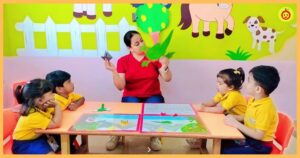
Choosing the right care environment during the early years can make a meaningful difference in a child’s daily experiences, confidence, and learning habits. Day care for children provides more than supervision while parents are working or managing other responsibilities. A well-planned environment gives children opportunities to play, communicate, explore, follow routines, and interact with other children under the guidance of caring adults. These experiences can encourage independence, curiosity, emotional awareness, and social skills. Children can participate in age-appropriate activities that support language, movement, creativity, problem-solving, and positive behavior. For parents looking for a child day care in Faridabad, choosing a safe, caring, and engaging environment can help provide children with positive experiences during their early years. Appleseeds focuses on creating an engaging environment where children can explore, interact, play, and develop important skills through age-appropriate activities.
A supportive routine can also help children become comfortable with sharing, listening, taking turns, and completing simple tasks. Appleseeds focuses on creating engaging experiences where young children can learn through interaction, play, creativity, and everyday activities. A thoughtful day care for children can therefore become an important part of a child’s early years while complementing the care and guidance provided at home.
Building Social Skills Through Interaction
Children naturally learn by observing and interacting with people around them. A structured care setting allows them to spend time with peers and participate in group activities. This can help them understand concepts such as sharing, cooperation, patience, and taking turns.
During games and classroom activities, children may learn how to express their ideas and listen to others. They also get opportunities to understand different emotions and respond appropriately to social situations. Regular interaction can gradually improve communication and confidence.
A positive environment encourages children to develop friendships while learning how to participate in a group. These experiences can contribute to early childhood development by helping children become more comfortable with communication and social relationships.
Encouraging Independent Habits
Young children gradually develop independence through everyday routines. Simple responsibilities such as putting toys away, washing hands, carrying personal belongings, or choosing an activity can help children understand responsibility.
Day care for children can provide consistent opportunities to practice these habits. When children receive encouragement instead of pressure, they can become more confident in attempting tasks independently.
Regular routines also make daily activities easier to understand. Children learn that different parts of the day have different purposes, such as playtime, meals, rest, creative activities, and group sessions. Predictable routines can provide a sense of comfort while encouraging children to participate actively.
Supporting Communication and Language
Communication develops through regular conversations, storytelling, songs, games, and interaction. Children benefit when adults listen to them patiently and encourage them to express their thoughts.
A quality day care for children can include activities that introduce new words and encourage children to communicate with both adults and peers. Storytelling can help children understand sequences, characters, emotions, and simple ideas. Rhymes and songs can make language practice enjoyable.
Children can also learn to ask questions, describe objects, explain what they are doing, and communicate their needs. These everyday experiences can strengthen vocabulary and listening abilities and create a strong foundation for future academic communication.
Learning Through Play and Exploration
Play is an important part of the early years because it allows children to explore ideas in an enjoyable way. Blocks, puzzles, drawing, pretend play, music, movement, and sensory activities can encourage children to experiment and discover.
Early childhood learning does not have to depend only on formal lessons. Children can learn basic concepts through games, conversations, stories, and hands-on experiences. For example, sorting objects can introduce basic classification, while building activities can encourage spatial awareness and problem-solving.
A thoughtfully planned day care for children can combine play with age-appropriate activities so that children remain engaged while developing different skills.
Developing Emotional Awareness
Understanding emotions is another important part of growing up. Children experience happiness, excitement, frustration, disappointment, and many other emotions during their everyday interactions.
Caregivers can help children identify and express these feelings in appropriate ways. When children learn that their emotions can be communicated through words, they may gradually become better at handling everyday challenges.
Group activities can also teach children how their actions affect others. Learning to wait, cooperate, apologize, and seek help can support emotional and social skills. Such experiences can contribute to early childhood development by helping children build awareness of themselves and their relationships with others.
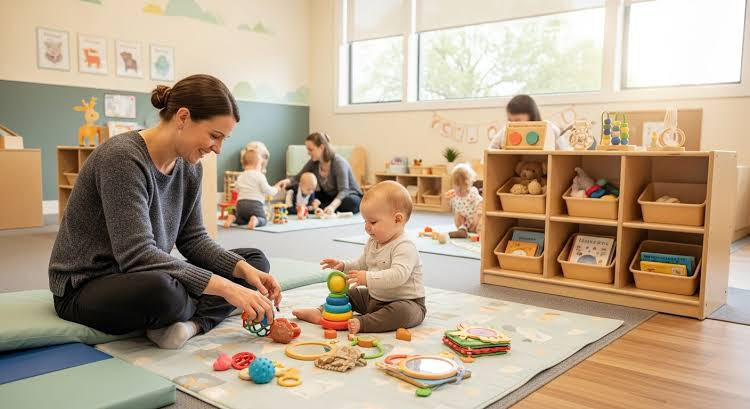
Promoting Creativity and Curiosity
Creative activities give children opportunities to express themselves without focusing only on right or wrong answers. Drawing, painting, clay work, music, dance, storytelling, and imaginative games can encourage creativity.
A good day care for children can provide different materials and activities that allow children to explore their interests. Creative experiences can also encourage children to ask questions and try new approaches.
Curiosity is particularly valuable during the early years because children are naturally interested in discovering how things work. Adults can support this curiosity by asking questions, providing suitable materials, and giving children enough time to explore.
Developing Physical and Motor Skills
Physical activities are also important for young children. Running, jumping, balancing, climbing, throwing, and other movement-based activities can support coordination and body awareness.
Fine motor activities such as drawing, coloring, puzzles, threading, and building can help children practice controlled hand movements. These skills can later support activities such as writing, cutting, and handling classroom materials.
A suitable day care for children can include both active play and quieter activities so children have opportunities to develop different physical abilities throughout the day.
Creating Positive Learning Experiences
Children often learn best when they feel comfortable, supported, and interested in what they are doing. A caring environment can make learning experiences more enjoyable and encourage children to participate.
Early childhood learning can happen through conversations, play, music, stories, creative work, movement, and everyday routines. The goal is not simply to make children memorize information but to help them develop curiosity, confidence, communication, and problem-solving abilities.
Parents can also support these experiences by communicating regularly with caregivers and understanding what activities their child enjoys. Consistency between home and care environments can make routines easier for children to follow.

What Parents Should Look for in a Day Care
Parents should consider several factors before selecting a care facility. Safety and cleanliness should be key considerations, along with caregiver interaction, daily routines, activities, rest arrangements, communication, and the overall environment.
It is also useful to understand how caregivers respond to children’s individual needs and interests. Parents can ask about daily schedules, learning activities, outdoor play, meals, communication practices, and emergency procedures.
The right day care for children should provide a balanced environment where children can play, interact, rest, explore, and learn according to their age and individual needs. Visiting the facility and observing the atmosphere can help parents understand whether the environment feels suitable for their child.
Conclusion
The early years provide children with countless opportunities to build habits, relationships, confidence, and curiosity. Day care for children can support these experiences through meaningful routines, play, social interaction, creative activities, physical movement, and communication. The benefits are not limited to academic preparation; children can also develop independence, emotional awareness, cooperation, and confidence through everyday experiences. Parents can make better choices by looking for a safe, caring, clean, and engaging environment that respects each child’s individual pace. Consistent communication between caregivers and families can further strengthen the child’s experience and help adults understand changing needs and interests. Appleseeds aims to provide an engaging environment where children can explore, interact, play, and develop important skills through age-appropriate experiences. For families looking for day care for children or a best play school in Faridabad, choosing an environment that combines care, learning, creativity, and positive interaction can help create a supportive foundation for the early years.