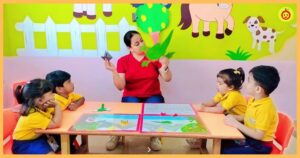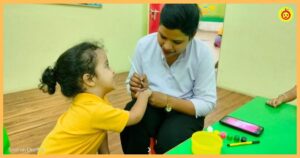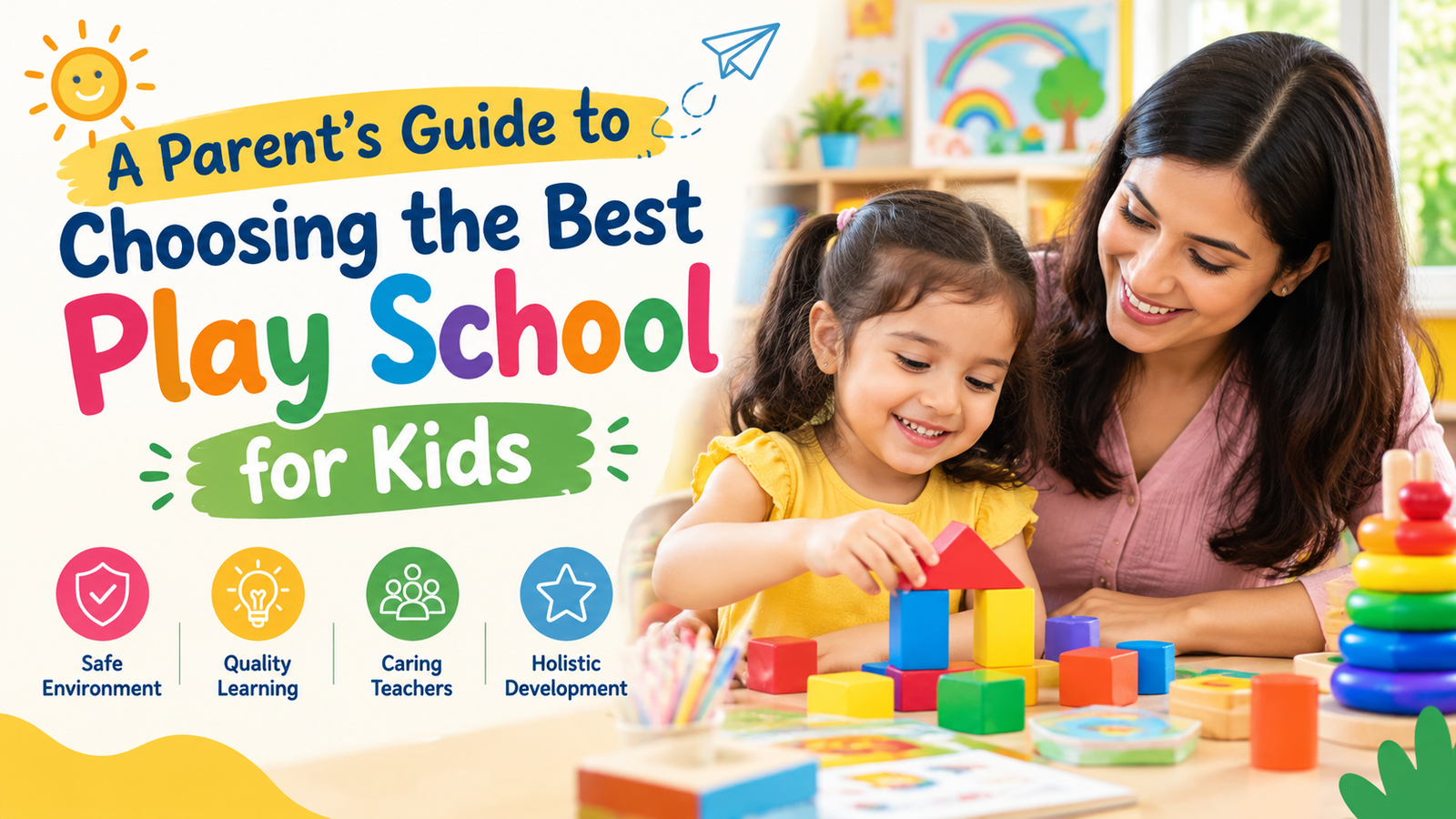
Choosing the right Play School is an important decision for every parent because the early years of a child’s life strongly influence their learning habits, confidence, communication, and social development. A good environment should make children feel safe, comfortable, and excited to learn. Parents searching for the best play school in Faridabad can consider options such as Appleseeds, where children can experience age-appropriate activities and opportunities for overall development. Before selecting a school, parents should understand the important factors that can make an educational environment suitable for their child.
The best Play School should focus on learning through fun rather than placing unnecessary academic pressure on young children. At this age, children learn naturally through stories, games, music, art, movement, and interaction with others. Parents should therefore look for a school that balances structured activities with enough freedom for children to explore. A positive early learning experience can help children develop curiosity and become more comfortable with new situations.
Read More: Montessori Play School: Benefits of This Child-Centered Learning Approach
Focus on a Safe and Child-Friendly Environment
Safety should always be one of the first priorities when selecting a school. Parents should check whether classrooms, play areas, entrances, and washrooms are designed with young children in mind. Clean surroundings, secure doors, safe furniture, and proper supervision can help create a comfortable environment.
A quality Play School should also have teachers and staff who understand how to communicate with young children. Teachers should be patient, supportive, and capable of handling different personalities. Children may take time to adjust to a new environment, so caring staff can make the transition easier.
Look at the Learning Approach
Every child learns differently, so parents should understand the teaching methods followed by the school. Instead of focusing only on worksheets and memorization, early education should include activities that encourage creativity, communication, problem-solving, and motor skills.
A good curriculum may include drawing, colouring, storytelling, puzzles, music, dance, outdoor games, role-playing, and simple practical activities. These experiences allow children to learn concepts naturally while enjoying the process. Parents choosing a Play School should ask how daily activities are planned and whether children receive opportunities for both individual and group learning.

Check Teacher-Child Interaction
The relationship between teachers and children plays an important role in early education. Young children need encouragement and positive attention to build confidence. Teachers should listen to children, answer their questions, appreciate their efforts, and gently guide them when they make mistakes.
Parents can also ask about the teacher-to-child ratio. Smaller groups may allow teachers to give more individual attention. A supportive teacher can identify a child’s interests and encourage them to participate in activities according to their comfort level.
Consider Development Beyond Academics
Early education is not only about learning letters and numbers. Children also need opportunities to develop social, emotional, physical, and communication skills. A well-planned Preschool for Kids should provide activities that encourage sharing, cooperation, listening, decision-making, and self-expression.
Outdoor play is equally important because physical activities help children develop coordination and motor skills. Indoor creative activities can support imagination and concentration. Parents should therefore choose an environment that supports multiple areas of development rather than focusing on academics alone.
Explore Facilities and Daily Activities
Before making a final decision, parents should visit the school and observe the available facilities. Look at classrooms, activity areas, outdoor spaces, learning materials, and hygiene arrangements. Ask about the daily routine and understand how much time children spend on learning, creative activities, meals, rest, and outdoor play.
A reliable Play School should have resources that are appropriate for the age group. Toys, books, puzzles, art materials, and educational games can make learning more engaging. Parents should also ask whether the school regularly updates its activities according to children’s changing interests and developmental needs.
Understand Communication With Parents
Good communication between parents and teachers can make a child’s early education more effective. Parents should know how the school shares information about attendance, activities, progress, behaviour, and important announcements.
Regular communication can help parents understand what their child enjoys and where additional support may be useful. A strong Kids Learning Center should encourage parents to remain involved in their child’s learning journey without creating unnecessary pressure.
Think About Location and Routine
The location of the school can also affect a child’s daily experience. A school that is reasonably close to home can reduce travel time and make the daily routine more convenient. Parents should consider transportation options, school timings, meal arrangements, and holiday schedules before making a decision.
A predictable routine can help children feel secure and understand what to expect each day. When selecting a Play School, parents should choose timings that fit comfortably with the child’s sleeping, eating, and family routine.

Compare Options Before Deciding
Parents should avoid selecting a school only because of advertisements, attractive facilities, or recommendations from others. Every child has different needs, interests, and comfort levels. Visiting different schools and speaking with teachers can provide a better understanding of what each option offers.
It is also useful to compare curriculum, safety practices, teacher experience, activities, facilities, communication methods, and overall environment. A suitable Preschool for Kids should provide a healthy balance of learning, play, creativity, and social interaction.
Make the Decision With Your Child in Mind
Choosing the right early education environment requires careful consideration, but parents do not need to look for perfection. The goal is to find a place where the child feels safe, respected, encouraged, and interested in learning. A good Play School should support the child’s natural curiosity while helping them gradually develop independence and confidence.
Parents can visit the shortlisted schools with their child and observe their reaction. If the environment feels welcoming and the activities match the child’s developmental needs, it may be a suitable choice. With thoughtful research and attention to safety, teaching quality, facilities, and emotional well-being, parents can choose an environment that creates a strong foundation for future learning. Schools such as Appleseeds can be considered by parents who are exploring supportive early-learning options for their children.