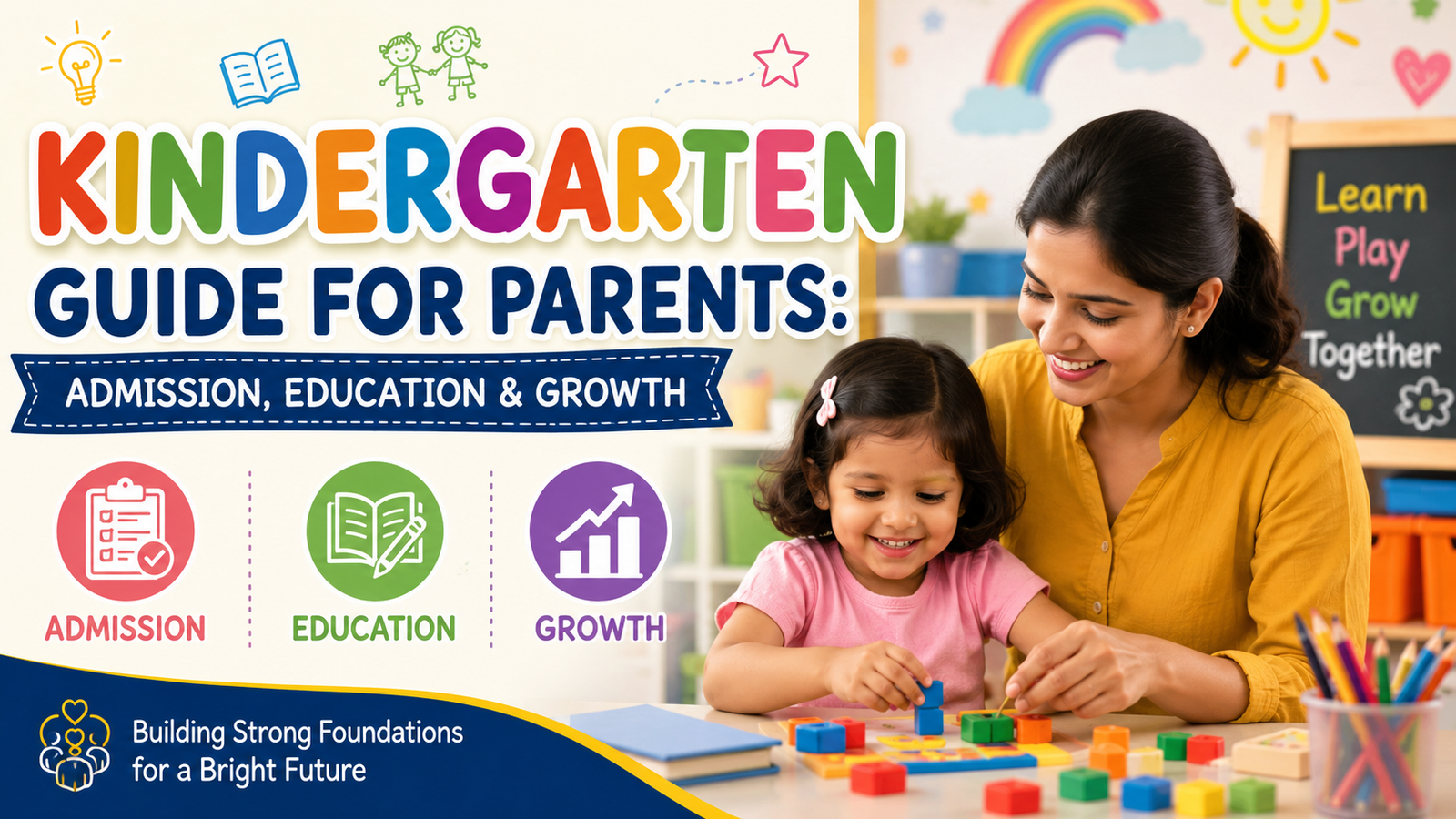
Starting kindergarten is an important milestone in a child’s early education. It is often the first structured learning experience where children begin developing academic, social, emotional, and communication skills outside their home environment. For parents, selecting the right kindergarten school in Faridabad requires careful consideration of the school’s learning approach, teachers, environment, safety, activities, and overall philosophy.
A good kindergarten should not only introduce children to letters and numbers but also encourage curiosity, creativity, independence, confidence, and positive relationships. This guide explains the key things parents should know about admission, education, classroom experiences, and childhood development.
Read more: Complete Kindergarten Guide for Parents: Admission, Learning & Growth
Understanding the Kindergarten Stage
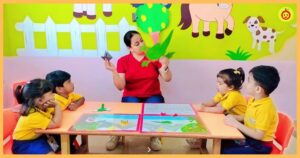
Kindergarten is generally designed for young children who are beginning their formal educational journey. At this stage, children learn through a combination of structured activities, play, stories, music, movement, creative projects, and hands-on experiences.
The goal is not simply to make children memorize information. Instead, kindergarten education should help children develop foundational skills that prepare them for future academic learning.
Parents should look for an environment where children feel comfortable asking questions, expressing themselves, exploring new ideas, and learning at their own pace.
How to Prepare for Admission
Kindergarten admission can vary from one school to another. Parents should begin researching schools well before the expected admission period. Check the age eligibility requirements, application process, required documents, admission dates, and available seats.
Some schools may arrange an interaction with the child and parents as part of the admission process. This should be viewed as an opportunity for the school to understand the child rather than as a stressful examination.
Parents should prepare documents such as the child’s birth certificate, photographs, previous school records if applicable, and address or identification documents according to the school’s requirements.
It is also helpful to visit the school personally. A visit allows parents to observe classrooms, meet teachers, understand routines, and assess whether the environment feels welcoming and child-friendly.
What Makes a Good Kindergarten Program?
A strong kindergarten program balances learning with play. Children at this age learn effectively when they can actively participate rather than simply listen to long explanations.
A well-designed program may include:
- Early literacy and language activities
- Basic mathematics and number concepts
- Storytelling and reading
- Art and craft
- Music and movement
- Outdoor play
- Simple science exploration
- Puzzles and problem-solving activities
- Group games
- Social and emotional learning
These experiences help children build different abilities while keeping learning enjoyable.
Focus on Early Literacy
Language development is one of the most important areas during kindergarten. Children begin recognizing letters, sounds, words, and simple sentences. Reading stories aloud can significantly support vocabulary and listening skills.
Parents can continue this learning at home by reading picture books, discussing stories, asking questions, and encouraging children to describe pictures or events.
Instead of correcting every mistake immediately, parents can encourage children to communicate confidently. Positive conversations help develop vocabulary as well as self-expression.
Developing Early Mathematical Skills
Kindergarten mathematics should be practical and engaging. Children can learn counting, shapes, patterns, comparisons, sorting, and basic addition through games and everyday activities.
For example, parents can ask children to count toys, identify shapes around the house, sort objects by size, or compare quantities while preparing meals.
Using real-life situations makes mathematical concepts easier for young learners to understand and remember.
Social and Emotional Development
Academic learning is only one part of kindergarten. Children also need opportunities to develop emotional and social skills.
Classroom activities can teach children how to share, cooperate, wait for their turn, listen to others, and solve small disagreements. Teachers can help children recognize and express emotions in appropriate ways.
Parents can support these skills at home by encouraging children to talk about their feelings and teaching them respectful ways to communicate with family members and friends.
Importance of Play-Based Learning
Play is an essential part of early childhood education. Through play, children experiment, make decisions, solve problems, and develop creativity.
Building blocks can support spatial understanding and problem-solving. Pretend play can improve communication and imagination, while outdoor games can develop coordination and physical strength.
Parents should therefore avoid choosing a program based only on how much written academic work children complete. A balanced kindergarten experience should provide sufficient opportunities for play and exploration.
Choosing the Right Teachers
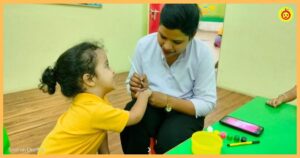
Teachers have a major influence on a child’s early educational experience. Parents should consider whether teachers are patient, supportive, approachable, and experienced in working with young children.
A good teacher understands that every child develops at a different pace. Instead of comparing children, teachers should provide encouragement and age-appropriate support.
During a school visit, parents can observe how teachers communicate with children. A warm and respectful interaction can tell you a lot about the classroom environment.
Safety and Cleanliness Matter
Safety should be one of the top priorities when selecting a kindergarten. Parents should check whether classrooms, play areas, washrooms, entrances, and other facilities are clean and child-friendly.
Ask about supervision during outdoor activities, visitor management, emergency procedures, transportation arrangements if applicable, and communication with parents.
A safe environment helps children feel secure and allows them to focus on learning and exploration.
How Parents Can Support Learning at Home
Education should continue beyond the classroom, but home learning does not need to feel like additional schoolwork. Parents can support development through simple everyday activities.
Reading together, drawing, singing songs, solving puzzles, cooking together, visiting parks, and talking about daily experiences can all contribute to learning.
Establishing a consistent routine can also help children understand expectations. Regular sleep, nutritious meals, playtime, reading, and family conversations create a supportive environment for development.
Choosing a School That Supports Overall Growth
Parents should consider the complete educational experience rather than focusing on one feature. Look at teaching methods, classroom size, activities, teacher interaction, safety measures, communication with families, and opportunities for individual attention.
For families exploring options in Faridabad, Apple Seeds School can be considered when looking for an early-learning environment that focuses on children’s foundational education and overall development.
Conclusion
Kindergarten is more than the beginning of formal schooling. It is a stage where children develop the foundation for future learning, relationships, confidence, independence, and creativity.
Parents can make the admission process easier by researching schools early, visiting campuses, understanding educational approaches, and considering their child’s individual needs. The right kindergarten should provide a safe, welcoming, and engaging environment where children can learn through meaningful activities.
With strong support from teachers and parents, kindergarten can become a positive first step toward lifelong learning and healthy development.