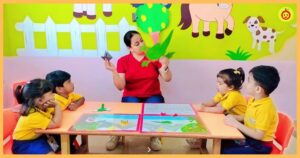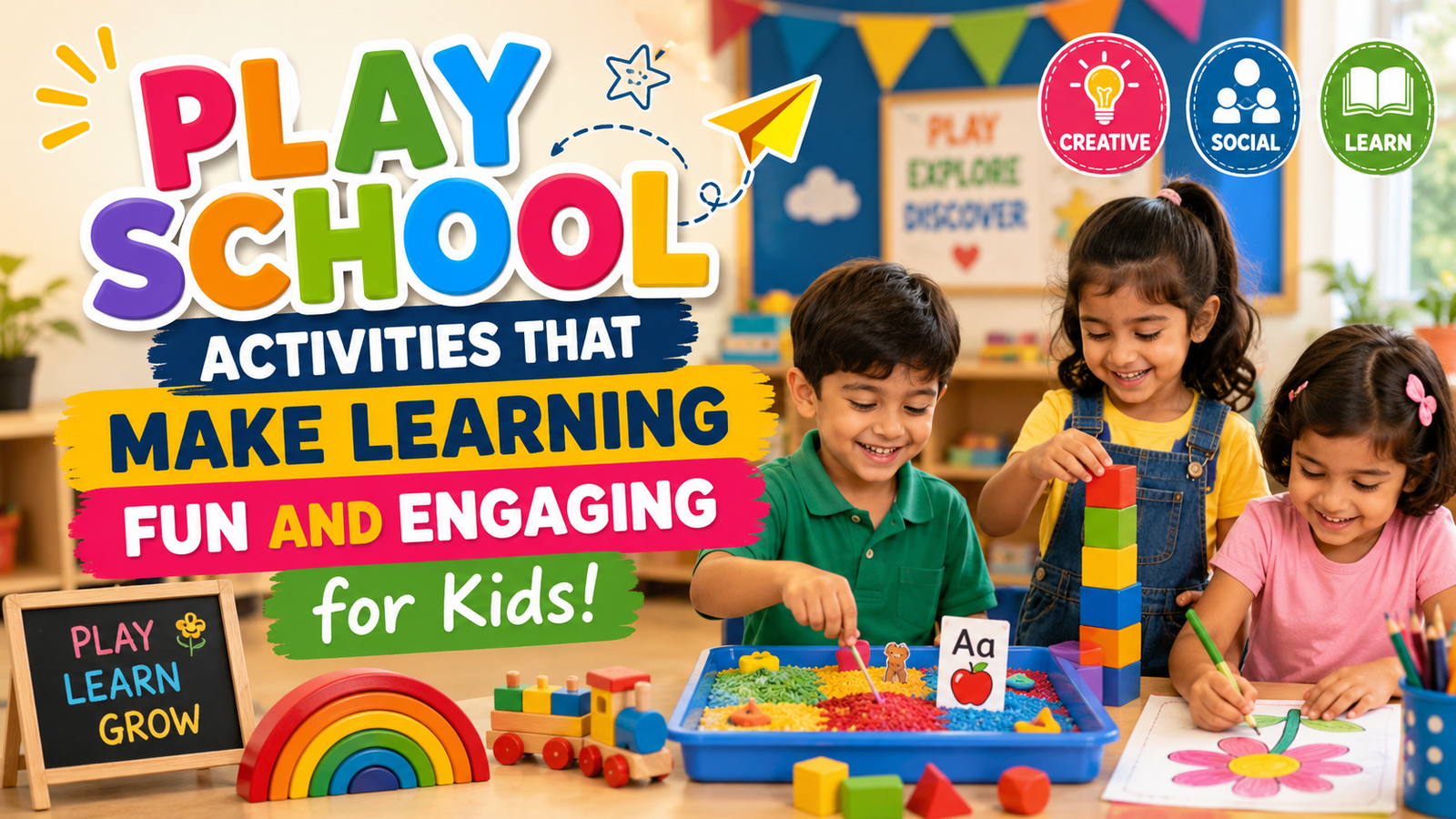
Early childhood is a crucial stage for cognitive, emotional, social, and physical development. Children learn best when they are actively involved in enjoyable experiences rather than traditional classroom instruction. This is why well-planned Play School Activities play an essential role in helping young learners explore, discover, and develop important life skills while having fun.
In modern preschool environments, learning is no longer limited to books and worksheets. Through interactive games, creative projects, storytelling, music, and outdoor experiences, children build confidence and curiosity naturally. This article explores the most effective activities that make learning enjoyable and meaningful for young children.
Why Are Play School Activities Important?
Young children are naturally curious and energetic. Structured yet enjoyable Play School Activities help channel that energy into productive learning experiences. These activities encourage creativity, improve communication skills, strengthen problem-solving abilities, and support social interaction.
Research in early childhood education shows that children retain information better when learning is connected to play. Whether it is identifying colors, learning numbers, or understanding teamwork, engaging activities create memorable experiences that contribute to long-term development.
Quick Takeaway
- Encourages creativity and imagination
- Improves motor skills and coordination
- Supports social and emotional development
- Enhances communication abilities
- Builds confidence and independence
1. Creative Arts and Craft Activities
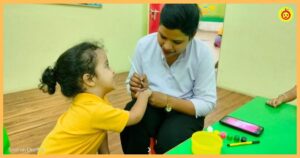
Arts and crafts remain among the most effective Play School Activities for developing creativity and fine motor skills. Children enjoy drawing, coloring, painting, paper folding, and creating simple craft projects.
These activities help children:
- Improve hand-eye coordination
- Recognize shapes and colors
- Express emotions creatively
- Develop concentration and patience
Teachers can introduce seasonal themes, nature-inspired projects, and simple DIY crafts to keep children excited about learning.
2. Storytelling and Reading Sessions
Storytelling is a powerful tool for language development. Interactive storytelling sessions help children improve listening skills, vocabulary, and imagination.
When teachers use puppets, picture books, voice modulation, and role-playing, stories become immersive experiences. Such Play School Activities encourage children to ask questions, predict outcomes, and express their ideas confidently.
Parents can support this learning by establishing daily reading habits at home and exploring educational storybooks together.
3. Music and Movement Games
Music naturally attracts young children and creates a joyful learning environment. Singing rhymes, dancing, clapping games, and action songs make learning more engaging.
Music-based activities help children:
- Improve memory retention
- Develop rhythm and coordination
- Enhance language skills
- Build self-expression
Many successful Play School Activities incorporate music because it helps children learn letters, numbers, and concepts through repetition and enjoyment.
4. Outdoor Exploration and Nature Walks
Outdoor learning provides opportunities for children to interact with their surroundings. Nature walks, gardening, and observation activities encourage curiosity and environmental awareness.
Children can learn about:
- Plants and animals
- Weather changes
- Colors and textures in nature
- Basic science concepts
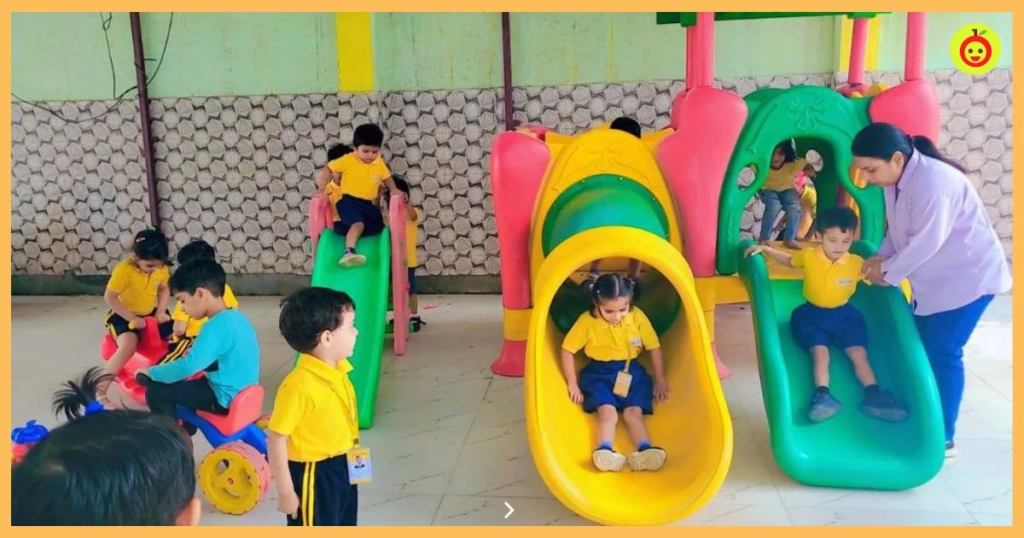
Outdoor Play School Activities also support physical development by encouraging running, jumping, balancing, and active movement.
Practical Tip
Create a simple “nature treasure hunt” where children collect leaves, flowers, or stones and discuss their observations afterward.
5. Sensory Play Experiences
Sensory activities stimulate children’s senses and support brain development. Popular sensory experiences include water play, sand play, clay modeling, and texture exploration.
These activities help children:
- Strengthen problem-solving skills
- Improve concentration
- Develop fine motor control
- Explore cause-and-effect relationships
Sensory-based Play School Activities are particularly beneficial for younger children because they encourage hands-on discovery and independent exploration.
6. Building Blocks and Construction Games
Construction toys and building blocks provide excellent opportunities for creative thinking and spatial awareness.
Children learn:
- Shape recognition
- Balance and structure concepts
- Teamwork and collaboration
- Logical thinking
Through trial and error, children discover solutions and build confidence in their abilities. These engaging experiences make learning both enjoyable and meaningful.
7. Role-Playing and Pretend Play
Pretend play allows children to explore real-world situations through imagination. Popular themes include doctors, teachers, shopkeepers, chefs, and community helpers.
Role-playing activities help children:
- Improve communication skills
- Build empathy
- Practice social interaction
- Develop creativity
Effective Play School Activities often include role-play stations where children can freely explore different characters and scenarios.
8. Educational Games and Puzzles
Games and puzzles introduce foundational academic concepts in a fun manner. Matching games, memory challenges, alphabet puzzles, and number activities encourage active participation.
Benefits include:
- Better concentration
- Enhanced memory skills
- Logical reasoning development
- Improved problem-solving abilities
By turning lessons into games, educators create positive learning experiences that motivate children to participate enthusiastically.
9. Science Experiments for Young Learners
Simple science activities spark curiosity and encourage exploration. Safe experiments such as color mixing, floating and sinking tests, and seed germination projects introduce children to basic scientific thinking.
These Play School Activities teach observation, prediction, and discovery while making learning exciting and interactive.
Example Activities
- Mixing colors with water
- Growing plants from seeds
- Exploring magnets
- Creating simple volcano experiments
Children naturally enjoy asking questions and discovering how things work, making science-based learning highly effective.
10. Group Activities and Team Challenges
Collaborative learning helps children develop social skills and emotional intelligence. Group games, circle time discussions, and team challenges teach cooperation and respect.
Children learn:
- Sharing and turn-taking
- Communication skills
- Leadership qualities
- Conflict resolution
Well-designed Play School Activities that involve teamwork help children build positive relationships and prepare them for future classroom environments.
How Parents Can Support Learning at Home
The benefits of preschool learning extend beyond the classroom. Parents can reinforce concepts through simple activities at home.
Some effective ideas include:
- Reading together daily
- Encouraging creative drawing
- Playing educational games
- Exploring outdoor environments
- Practicing songs and rhymes
Families interested in quality early education may also explore resources related to play school education for kids to better understand age-appropriate learning approaches and developmental milestones.
Additionally, educational institutions can create valuable internal linking opportunities by connecting readers to topics such as preschool admission guides, early childhood development tips, learning through play strategies, and school readiness programs. Parents searching for a trusted play school in faridabad often look for these resources before making enrollment decisions.
Choosing Activities That Match Children’s Interests
Not every child learns in the same way. Some enjoy creative projects, while others prefer physical activities or storytelling. Observing children’s interests helps educators and parents select the most effective Play School Activities for their development.
When activities align with a child’s natural curiosity, learning becomes effortless, enjoyable, and more impactful. The goal is not simply academic achievement but the development of confidence, creativity, communication skills, and a lifelong love for learning.
Conclusion
The best learning experiences for young children are those that combine education with enjoyment. From arts and crafts to science experiments and outdoor exploration, engaging Play School Activities help children develop essential skills while nurturing curiosity and confidence.
By creating opportunities for active participation, educators and parents can transform everyday moments into meaningful learning experiences. When children learn through play, they build strong foundations that support future academic success and personal growth.