Choosing the right early education environment can shape how children approach learning, relationships, and everyday challenges. A Montessori play school focuses on the child as an active learner, encouraging independence, curiosity, concentration, and practical skills through carefully designed activities. For parents comparing options such as the best Montessori play school in Faridabad, understanding this child-centered approach can make the decision easier. Apple Seeds school follows an environment where children can learn at their own pace while developing confidence and essential early-life skills.
What Is a Montessori Play School?
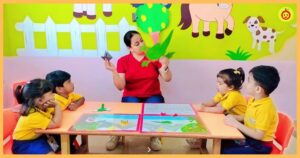
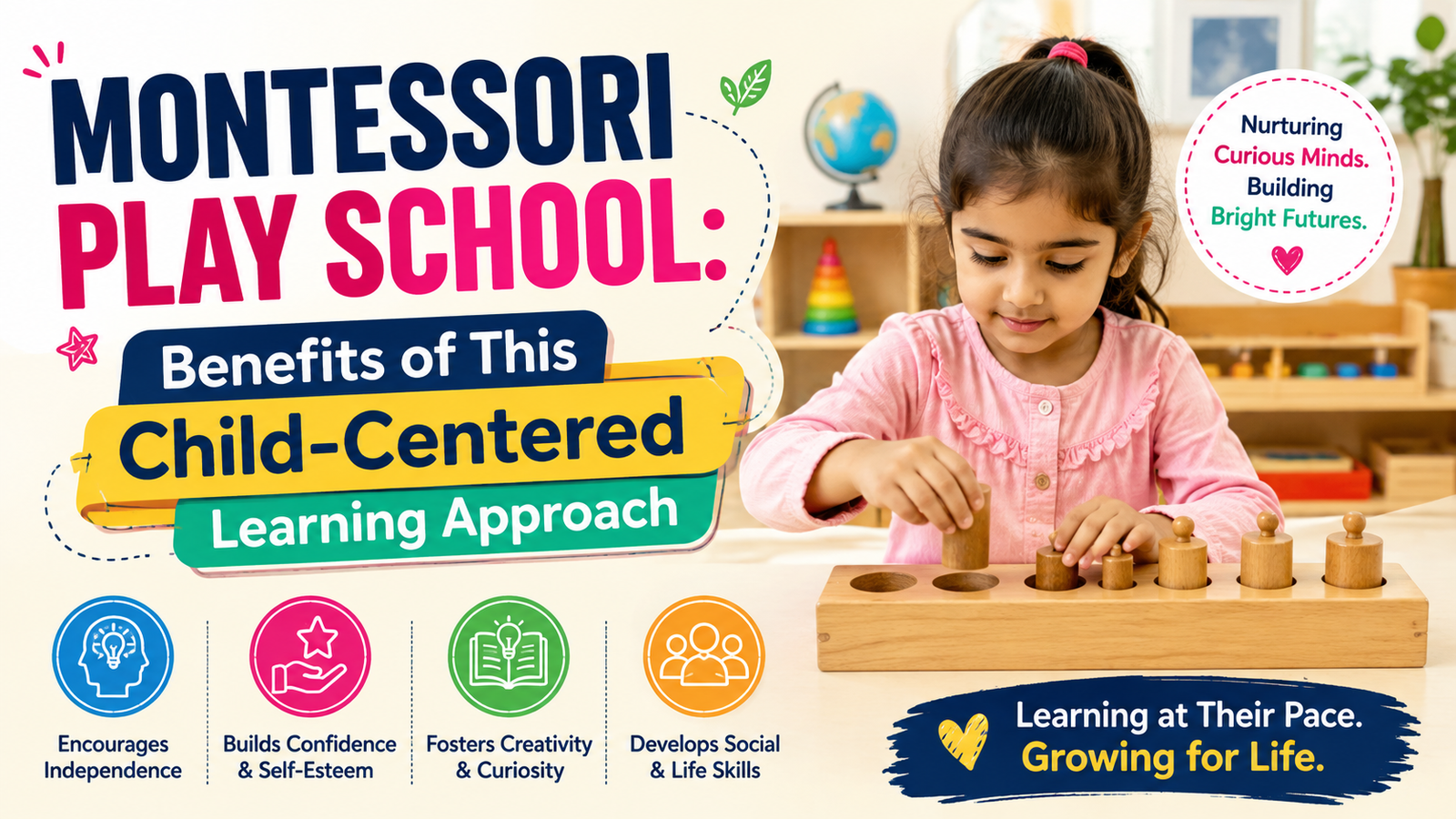
A Montessori play school is an early education setting based on the principles developed by Dr. Maria Montessori. Instead of relying mainly on teacher-led instruction, children interact with purposeful learning materials, choose suitable activities, and gradually develop independence. Teachers observe children closely and provide guidance when needed rather than controlling every learning activity.
See more: Why Creche Matters: How Quality Childcare Supports Early Childhood Growth
The classroom is generally organized into accessible learning areas involving practical life, sensory development, language, mathematics, culture, and creative exploration. This approach helps children learn through direct experiences instead of simply memorizing information.
Key Benefits of Montessori Education for Young Children
One major advantage of Montessori education is that it supports the whole child. Academic development is important, but children also need emotional, social, physical, and practical skills to become confident learners.
1. Encourages Independence
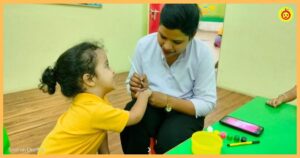
Children are encouraged to complete age-appropriate tasks independently. Activities such as arranging materials, pouring, sorting, cleaning, dressing, and organizing help develop coordination and self-reliance. These small accomplishments can build confidence and teach children that effort leads to progress.
2. Supports Individual Learning Pace
Every child develops differently. A Montessori classroom allows children to spend appropriate time practicing skills rather than expecting everyone to understand something at exactly the same moment. This flexibility can reduce unnecessary pressure and make learning more enjoyable.
3. Develops Concentration and Focus
Montessori activities are designed with specific learning purposes. When children repeatedly work with materials that interest them, they can gradually develop longer attention spans. This ability to concentrate can become valuable when they encounter more structured academic tasks isbvn ea.
4. Promotes Hands-On Learning
Young children learn effectively by touching, moving, observing, comparing, and experimenting. A Montessori preschool provides materials that allow children to understand concepts through physical experiences. For example, counting materials can make early mathematics more concrete, while sound and letter activities can support language development.
5. Builds Social and Emotional Skills
Children learn to respect personal space, wait for their turn, communicate appropriately, and care for shared materials. Mixed-age classroom environments may also allow older children to demonstrate skills while younger children learn through observation. These experiences can encourage cooperation and empathy.
Why a Montessori School for Kids Supports Holistic Development
A Montessori school for kids does more than prepare children for future academic subjects. It encourages them to become capable problem-solvers who can make appropriate choices and take responsibility for their actions.
Practical-life activities are especially valuable because they connect education with everyday experiences. Children may practice transferring objects, arranging materials, preparing simple tasks, or maintaining their learning space. Such activities can strengthen fine-motor coordination while teaching order, patience, and responsibility.
Parents can support this approach at home by giving children simple responsibilities, allowing them to attempt tasks independently, and avoiding unnecessary intervention when they are capable of solving a problem themselves.
Montessori Kindergarten and School Readiness
A Montessori kindergarten can help children transition toward more structured learning while maintaining the principles of independence and exploration. Children may develop early literacy, numeracy, communication, problem-solving, and social skills through carefully sequenced activities.
School readiness should not be measured only by whether a child can recognize letters or numbers. Confidence, listening skills, self-regulation, communication, curiosity, and the ability to follow routines are also important. A quality Montessori environment can support these areas together.
How a Montessori Early Learning Center Works
A Montessori early learning center typically emphasizes a prepared environment where materials are organized and accessible to children. The teacher acts as a guide, observing each child and introducing activities when the child is ready.
This does not mean children simply do whatever they want. Effective Montessori education includes clear expectations, routines, respectful behavior, and purposeful materials. The balance between freedom and responsibility helps children understand that choices come with appropriate boundaries.
When evaluating a school, parents should look beyond attractive classrooms. Ask about teacher qualifications, classroom routines, child-to-teacher ratios, safety procedures, learning materials, communication with parents, and how individual development is observed.
Practical Tips for Choosing the Right Montessori School
Before enrolling your child, consider these practical questions:
- Visit the classroom and observe how teachers interact with children.
- Check whether learning materials are clean, accessible, and age-appropriate.
- Ask how teachers monitor individual progress.
- Understand the daily routine, activity schedule, and outdoor opportunities.
- Discuss safety, hygiene, meals, transportation, and emergency procedures.
- Ask how parents receive updates about their child’s development.
You can also explore related internal resources such as early childhood education, preschool learning activities, and school readiness tips to understand what your child may need before enrollment.
Quick Takeaway for Parents
The core strength of a Montessori play school is its emphasis on learning through purposeful activity, independence, exploration, and respect for individual development. Rather than treating every child as though they learn in exactly the same way, Montessori education creates opportunities for children to practice skills according to their developmental readiness.
A Montessori preschool can therefore be a useful option for families seeking a balanced early education experience. However, the quality of implementation matters. Parents should choose a school where trained educators, safe facilities, thoughtful materials, positive relationships, and appropriate child development practices work together.
Ultimately, the goal of a Montessori play school is not simply to teach children academic facts. It is to help them become confident, curious, responsible, and capable learners. With the right environment and consistent support from both teachers and families, the Montessori approach can provide a strong foundation for lifelong learning.