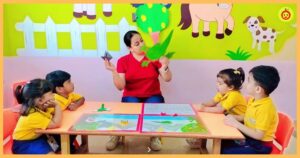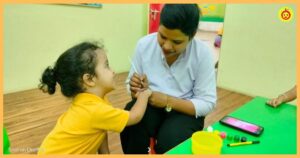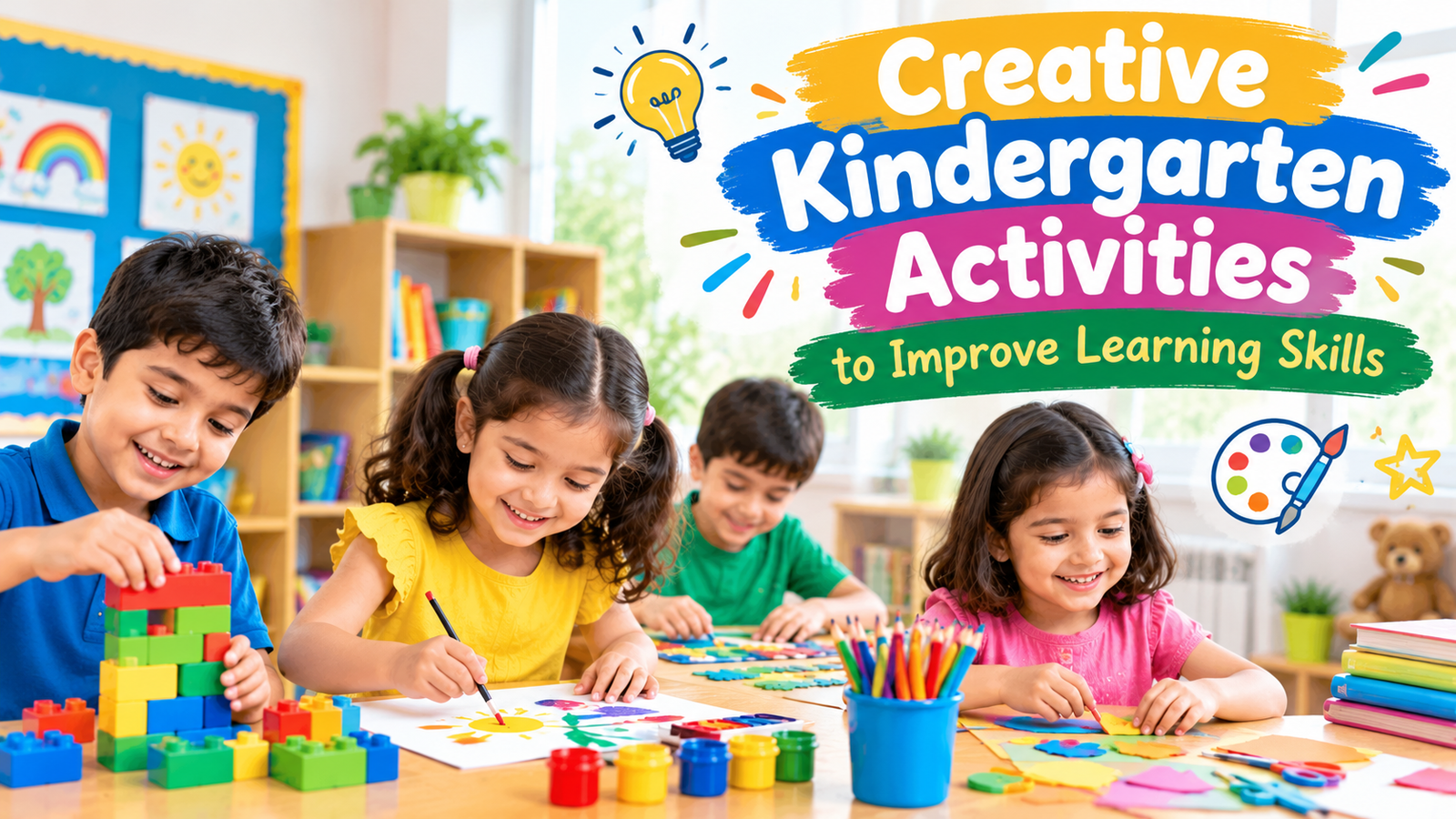
Appleseeds believes that early education should combine creativity, exploration, and enjoyable learning experiences. Introducing creative kindergarten activities helps young children develop essential skills while encouraging curiosity, imagination, and confidence. Kindergarten is an important stage of childhood when children begin understanding their surroundings, communicating with others, and developing independent thinking abilities. For parents looking for a reliable day care in Faridabad, Appleseeds offers a nurturing environment that encourages learning through play, storytelling, art, music, and interactive games. These activities make learning enjoyable while supporting cognitive, physical, emotional, and social development. A balanced combination of structured learning and playful exploration creates a positive environment where children feel comfortable expressing themselves and discovering their individual interests.
Teachers and parents play an important role in creating meaningful learning opportunities that match children’s developmental needs. Simple activities involving colours, numbers, shapes, sounds, movement, and teamwork can improve concentration, communication, coordination, and problem-solving abilities. When children participate actively instead of relying only on traditional classroom instruction, they develop greater enthusiasm for learning and build a strong foundation for future academic success.
Read More: Healthy Daily Routines For Children Attending Day Care Centers
Why Are Creative Kindergarten Activities Important?
Creative kindergarten activities provide opportunities for children to learn through practical experiences rather than memorisation alone. At this stage, children naturally explore their surroundings through observation, imagination, movement, and interaction.
Play-based learning helps improve attention, memory, communication, and problem-solving abilities. It also encourages children to express their thoughts and develop confidence in unfamiliar situations.
Teachers can introduce fun learning activities for kids to make classroom lessons more engaging and interactive.
These experiences help children understand basic educational concepts while developing independence, cooperation, and positive learning habits.
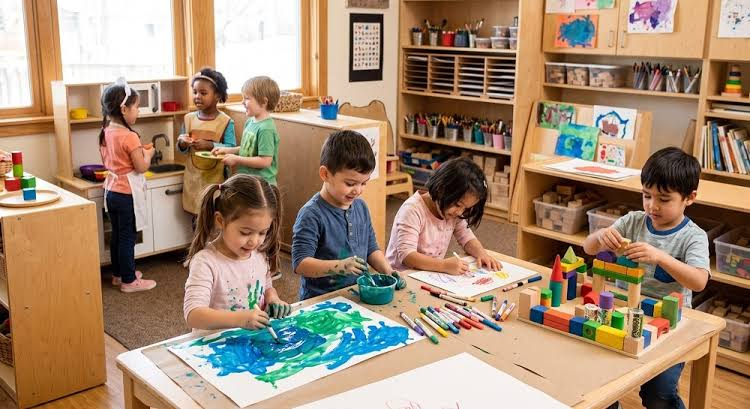
1. Art and Craft Activities for Imagination
Art and craft sessions allow children to express their creativity through colours, shapes, textures, and different materials.
Drawing, finger painting, paper folding, colouring, and clay modelling are excellent ways to encourage imaginative thinking.
These activities also strengthen fine motor skills, improve hand-eye coordination, and develop concentration.
Teachers can encourage children to create simple objects, animals, flowers, or seasonal decorations using child-safe materials.
Rather than focusing on perfect results, the goal should be to appreciate children’s creativity and individual expression.
2. Storytelling and Picture Reading
Storytelling is one of the most effective methods for improving children’s language and communication abilities.
Teachers can use colourful picture books, puppets, illustrations, and interactive storytelling sessions to capture children’s attention.
Asking simple questions about characters, events, and story endings encourages listening, imagination, and critical thinking.
Children can also be invited to describe pictures or create short stories using their own words.
These activities support vocabulary development, sentence formation, memory, and emotional understanding.
3. Number and Counting Games
Introducing mathematical concepts through games makes early learning easier and more enjoyable.
Teachers can use colourful blocks, counting beads, number cards, toys, and everyday classroom objects to explain basic counting.
Children can practise arranging numbers, matching quantities, identifying shapes, and recognising simple patterns.
Such creative kindergarten activities help develop logical thinking and introduce mathematical concepts without creating unnecessary academic pressure.
Interactive counting games also improve observation, concentration, and problem-solving abilities.
4. Music, Dance and Movement Activities
Music and movement provide enjoyable opportunities for children to develop coordination, rhythm, and self-expression.
Singing nursery rhymes, clapping to musical patterns, dancing, and playing simple instruments encourage active participation.
Movement-based games can also help children understand directions, recognise body movements, and improve balance.
These activities promote physical development while creating a cheerful classroom environment.
Group performances encourage cooperation, confidence, and positive social interaction among children.
5. Building Blocks and Puzzle Games
Building blocks and puzzles are excellent educational tools for developing children’s thinking abilities.
Stacking blocks, creating structures, sorting shapes, and completing age-appropriate puzzles require observation, patience, and coordination.
Children gradually learn to recognise patterns, compare sizes, and experiment with different solutions.
These experiences contribute to early childhood skill development by strengthening logical reasoning, spatial awareness, and independent problem-solving abilities.
Teachers should encourage children to explore different possibilities instead of immediately providing answers.
6. Nature Exploration and Outdoor Learning
Outdoor activities allow children to discover their surroundings through direct observation and sensory experiences.
Teachers can organise supervised nature walks, gardening sessions, leaf collection, and simple environmental awareness activities.
Children can learn about plants, animals, weather, colours, and seasonal changes through practical exploration.
Including outdoor experiences in creative kindergarten activities encourages curiosity, observation, and appreciation for nature.
Outdoor play also supports physical fitness, coordination, teamwork, and emotional well-being.
7. Role-Playing and Pretend Play
Pretend play encourages children to explore real-life situations through imagination and social interaction.
Teachers can create simple classroom setups such as a grocery store, hospital, kitchen, or post office.
Children can take different roles, communicate with classmates, and practise everyday conversations.
These experiences improve vocabulary, confidence, decision-making, and emotional understanding.
Role-playing also teaches important social values such as cooperation, patience, kindness, and respect for others.
8. Sensory Learning Activities
Sensory activities encourage children to explore different textures, sounds, colours, and shapes using their senses.
Playing with modelling clay, sorting textured objects, exploring water under supervision, and identifying familiar sounds can make learning more interactive.
These activities improve observation, concentration, coordination, and sensory awareness.
Teachers should select age-appropriate materials and maintain proper supervision throughout each activity.
A safe and engaging environment allows children to explore confidently while developing new abilities.
How Creative Kindergarten Activities Support Skill Development
Creative kindergarten activities contribute to children’s overall development by combining educational concepts with practical experiences.
Their major benefits include:
- Cognitive Development: Improves memory, concentration, reasoning, and problem-solving abilities.
- Language Development: Encourages vocabulary building, listening, and communication.
- Physical Development: Strengthens fine and gross motor coordination.
- Social Development: Promotes sharing, cooperation, teamwork, and friendship.
- Emotional Development: Builds confidence, independence, patience, and self-expression.
- Creative Development: Encourages imagination, curiosity, and innovative thinking.
These benefits demonstrate how fun learning activities for kids can make education meaningful while supporting balanced childhood growth.
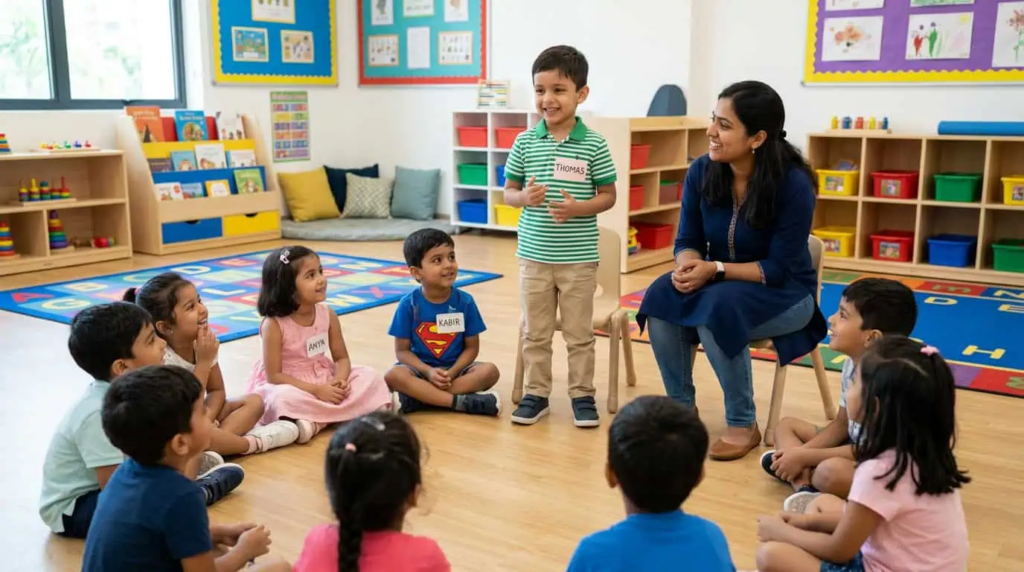
Tips for Parents to Encourage Learning at Home
Parents can support classroom education by introducing simple learning experiences into everyday routines.
Reading picture books, drawing together, solving puzzles, singing rhymes, and playing counting games are effective ways to encourage active participation.
Allowing children to ask questions and experiment with different ideas promotes curiosity and confidence.
Parents should also maintain a balanced routine that includes adequate sleep, nutritious meals, outdoor play, and relaxation.
Consistent encouragement and positive interaction contribute significantly to early childhood skill development.
Conclusion
Creative kindergarten activities play an essential role in building a strong educational foundation for young children. By combining storytelling, art, music, puzzles, outdoor exploration, and imaginative play, teachers and parents can encourage curiosity while improving important learning abilities.
A positive learning environment helps children develop confidence, communication skills, creativity, and independence without unnecessary academic pressure. For parents looking for a nurturing kindergarten school in Faridabad, Appleseeds focuses on creating engaging educational experiences that encourage children to explore, interact, and learn through enjoyable activities, supporting their overall growth and preparing them for future learning opportunities.